By using this site, you agree to the Privacy Policy and Terms of Use.
Accept
News
Tuesday, Jun 23, 2026
  • NARL
  • NaCORI
  • NaCRRI
  • NaSARRI
  • NaFIRRI
  • NaFORRI
  • NaLIRRI
  • HOME
  • INSTITUTES
    • SECRETARIAT
    • NaCCRI News
    • NaCORI News
    • NaFIRRI News
    • NaFORRI News
    • NaLIRRI News
    • NARL News
    • NaSARRI News
    • AbiZARDI News
    • BuZARDI News
    • BugiZARDI News
    • KaZARDI News
    • MbaZARDI News
    • MuZARDI News
    • NabuinZARDI News
    • NgettaZARDI News
    • RwebZARDI News
  • CASH CROPS
    • Cocoa
    • Coffee
    • Cotton
  • CEREALS
    • Millet
    • Sorghum
    • Maize
    • Rice
  • OTHERS
    • Beans
    • Banana
    • Groundnuts
    • Vegetables
    • Sunflower
    • Soya Beans
    • Simsim
    • Palm Oil
    • Forestry
  • LIVESTOCK
    • Dairy
    • Beef
    • Poultry
    • Aquaculture
    • Vaccinology
  • ROOT CROPS
    • Cassava
    • Irish Potatoe
    • Sweet Potatoe
  • TECHNOLOGIES
Reading: Outbreak of Variegated Grasshoppers in Kyotera
Font ResizerAa
NewsNews
  • Home
  • Blog Index
  • Contact
Search
  • Pages
    • Home
    • Contact Us
    • Blog Index
    • 404 Page
    • Search Page
  • Categories

Trending →

NARL eBulletin-March 2026

By Emily Arayo June 23, 2026

A path to Seed Sovereignty for Karamoja Farmers

By Carolyn Asapo June 18, 2026

Boosting Goat Production: NARO Bulindi Tackles Livestock Nutrition at CityFarm Expo

By Abor Bob June 18, 2026

Researchers embark on a journey to tap the Gold in Herbs and Spices

By Maria Nampeera June 3, 2026

MUZARDI and University of Burundi Collaborate to Strengthen Coordination among Actors along Chicken Value Chain

By Dixson Muyomba June 3, 2026
Follow US
© Foxiz News Network. Ruby Design Company. All Rights Reserved.
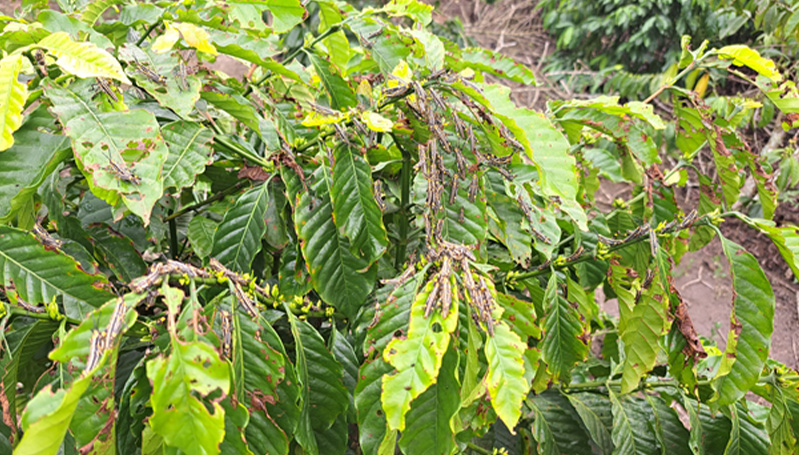
Variegated grasshoppers feeding on a coffee tree.
News > Blog > General News > Outbreak of Variegated Grasshoppers in Kyotera
General News

Outbreak of Variegated Grasshoppers in Kyotera

Barbara Nambozo
Last updated: June 2, 2025 8:04 am
By Barbara Nambozo
Share
3 Min Read
SHARE

Coffee farmers in Bbanda village, Kabira Sub-county in Kyotera district call upon the Government for rescue over the outbreak of an unknown pest in their area. The pest infestation which was first noticed on an individual farm in Bbanda village in December 2023 has since spread to other farms in the same village causing a lot of anxiety over anticipated yield loss.

The farmers are worried that the pest will spread and become a national crisis if there is no rapid intervention to get rid of them. This is because the pest feeds mainly on the leaves thereby drying the other parts of coffee because of the compromised food supply to the tree. It should be noted that Kyotera District Agricultural officers, UCDA and NARO-NaCORI are already on the ground assessing the situation and creating awareness on how the pest can be managed as they wait for other management practices that will be recommended by NARO researchers. When NaCORI carried out a rapid appraisal of the situation, they discovered that the unknown pest was the variegated grasshoppers. It was also discovered that damage caused by the pest is very insignificant as compared to earlier allegations in the news that the pest dries the entire tree upon attack. It was noted that the bear trees without any leaves are a result of the coffee wilt disease and not the variegated grasshoppers.

This is because the majority of farmers in Kyotera still have the old clones. The scientists advised the farmers to plant the Coffee wilt disease-resistant varieties to avoid being attacked by coffee wilt. Additionally, they were reminded to practice management of their fields to be able to destroy the existence of the pest. Among the management practices include weeding to destroy their eggs as well as their habitat during the day, pruning and desuckering to allow light and heat penetration since the pest is allergic to sunshine and heat. They were advised to take a community approach like handpicking and burning the pest to destroy its existence.

When interviewed Mr Ssempijja Edward an agricultural extension officer says this is not the first time he has seen the pest. He says there was a precedential incident in the 1990s where the same pest attacked coffee and the Government ordered massive spraying with recommended chemicals which eventually killed all of them in a short while. He also notes that these pests only attack coffee fields near swampy areas and don’t move so far away from the swamp. He therefore suspects that they may be originating from swamps. Indeed, NARO researchers also noted that most affected farms in the village were bordering a swamp.  

TAGGED:General Newstop stories
Share This Article
Facebook Twitter Copy Link
Leave a comment

Leave a Reply Cancel reply

Your email address will not be published. Required fields are marked *

Recent Posts

  • NARL eBulletin-March 2026
  • A path to Seed Sovereignty for Karamoja Farmers
  • Boosting Goat Production: NARO Bulindi Tackles Livestock Nutrition at CityFarm Expo
  • Researchers embark on a journey to tap the Gold in Herbs and Spices
  • MUZARDI and University of Burundi Collaborate to Strengthen Coordination among Actors along Chicken Value Chain

Recent Comments

No comments to show.

You Might Also Like ↷

NARL eBulletin-March 2026

June 23, 2026

Boosting Goat Production: NARO Bulindi Tackles Livestock Nutrition at CityFarm Expo

June 18, 2026

Bunyoro turns to bee forage restoration for enhancing climate change resilience and livelihood gains

May 25, 2026

Research advances on the new Excelsa Coffee

May 19, 2026
  • Advertise with us
  • Newsletters
  • Complaint
  • Deal
Stay tuned for a blend of captivating content that not only informs but also inspires you to navigate the ever-evolving landscape of technology, marketing, and market trends!
News
  • NaCCRI
  • NaCORRI
  • NaFIRRI
  • NaFORRI
  • NaLIRRI
  • NARL
  • NARO
  • NaSARRI
  • AbiZARDI
  • BugiZARDI
  • BuZARDI
  • KaZARDI
  • MbaZARDI
  • MuZARDI
  • NabuinZARDI
  • NgettaZARDI
  • RwebZARDI
5.2kFollowersLike
18.8kFollowersFollow
15.8kSubscribersSubscribe
Copyright © National Agricultural Research Organisation – NARO