By using this site, you agree to the Privacy Policy and Terms of Use.
Accept
News
Saturday, Apr 11, 2026
  • NARL
  • NaCORI
  • NaCRRI
  • NaSARRI
  • NaFIRRI
  • NaFORRI
  • NaLIRRI
  • HOME
  • INSTITUTES
    • SECRETARIAT
    • NaCCRI News
    • NaCORI News
    • NaFIRRI News
    • NaFORRI News
    • NaLIRRI News
    • NARL News
    • NaSARRI News
    • AbiZARDI News
    • BuZARDI News
    • BugiZARDI News
    • KaZARDI News
    • MbaZARDI News
    • MuZARDI News
    • NabuinZARDI News
    • NgettaZARDI News
    • RwebZARDI News
  • CASH CROPS
    • Cocoa
    • Coffee
    • Cotton
  • CEREALS
    • Millet
    • Sorghum
    • Maize
    • Rice
  • OTHERS
    • Beans
    • Banana
    • Groundnuts
    • Vegetables
    • Sunflower
    • Soya Beans
    • Simsim
    • Palm Oil
    • Forestry
  • LIVESTOCK
    • Dairy
    • Beef
    • Poultry
    • Aquaculture
    • Vaccinology
  • ROOT CROPS
    • Cassava
    • Irish Potatoe
    • Sweet Potatoe
  • TECHNOLOGIES
Reading: Is kisansa coffee a ‘silver bullet’ to climate change challenges?
Font ResizerAa
NewsNews
  • Home
  • Blog Index
  • Contact
Search
  • Pages
    • Home
    • Contact Us
    • Blog Index
    • 404 Page
    • Search Page
  • Categories

Trending →

Northern Uganda Farmers Urged to Embrace Research-Driven Technologies

By Frank Mugabi March 30, 2026

Inside Uganda’s Scientific Race to develop drought-resilient coffee

By Admin March 12, 2026

How Uganda’s NaCORI is redefining the future of coffee farming

By Barbara Nambozo March 12, 2026

NACORI CoCoDEV PROJECT Newsletter

By Barbara Nambozo March 12, 2026

How Uganda is Digitizing Coffee for Transparency, Traceability, and Higher Farmer Incomes

By Barbara Nambozo March 1, 2026
Follow US
© Foxiz News Network. Ruby Design Company. All Rights Reserved.
News > Blog > NaCORI News > Is kisansa coffee a ‘silver bullet’ to climate change challenges?
NaCORI News

Is kisansa coffee a ‘silver bullet’ to climate change challenges?

Barbara Nambozo
Last updated: March 12, 2026 3:18 pm
By Barbara Nambozo
Share
4 Min Read
SHARE

There is increasing interest in the Kisansa coffee variety by stakeholders in the coffee industry. Kisansa is a popular local name for the Coffea Liberica variety (Liberica). It is also well-known as Excelsa coffee variety. Research studies show this species is resistant to pests and diseases and it is not easily affected by drought. Kisansa produces bigger beans and fruits compared to Arabica and Robusta coffee.

Coffee Liberica is not a new coffee species. During the 19th Century, Liberica and Arabica were the main coffee species of global commerce. Despite this apparent success, the use of Liberica was remarkably short-lived. By the turn of the 20th Century, it reportedly almost universally fell out of favour and its use as a commodity crop came to an abrupt end.

In Uganda, the history of Kisansa is not well-documented. Some trace its origin as an indigenous plant from the natural forests around the country; the Democratic Republic of Congo and West Africa. A 2019 baseline study by the Uganda Coffee Development Authority on Kisansa shows that the species is cultivated mainly by smallholder farmers, who own between 1-2,000 trees spread over different coffee plots. These farmers often intercrop Kisansa in Robusta coffee fields.

In a warming world, could Kisansa be the ‘silver’ bullet to most of the production challenges facing coffee farmers? With a robust growth pattern (a tree grows up to 10 meters high); the species has a deep-rooted system that can withstand climate change effects. Its leaves are thick and always green. Some farmers attest to harvesting up to 200kg of Kisansa cherry from a single tree. This suggests that with relevant approvals, the Kisansa coffee species could be recommended for planting in the drier areas of Uganda. This could increase on coffee production volumes for the country.

Findings show that the species can offer good traits for breeding for drought resilience, but it cannot be presented as a direct solution to the changing climate. Mitigating the impact of climate-change on crops calls for a combination of actions, including applying climate-smart agriculture tactics such as mulching, terracing and planting shade crops.

Nonetheless, Liberica can be a good source for root stock in coffee breeding work, especially since it has a deep root system and exhibits resilience to drought, pests and diseases. It can provide genetic diversity for improved coffee variety selection.

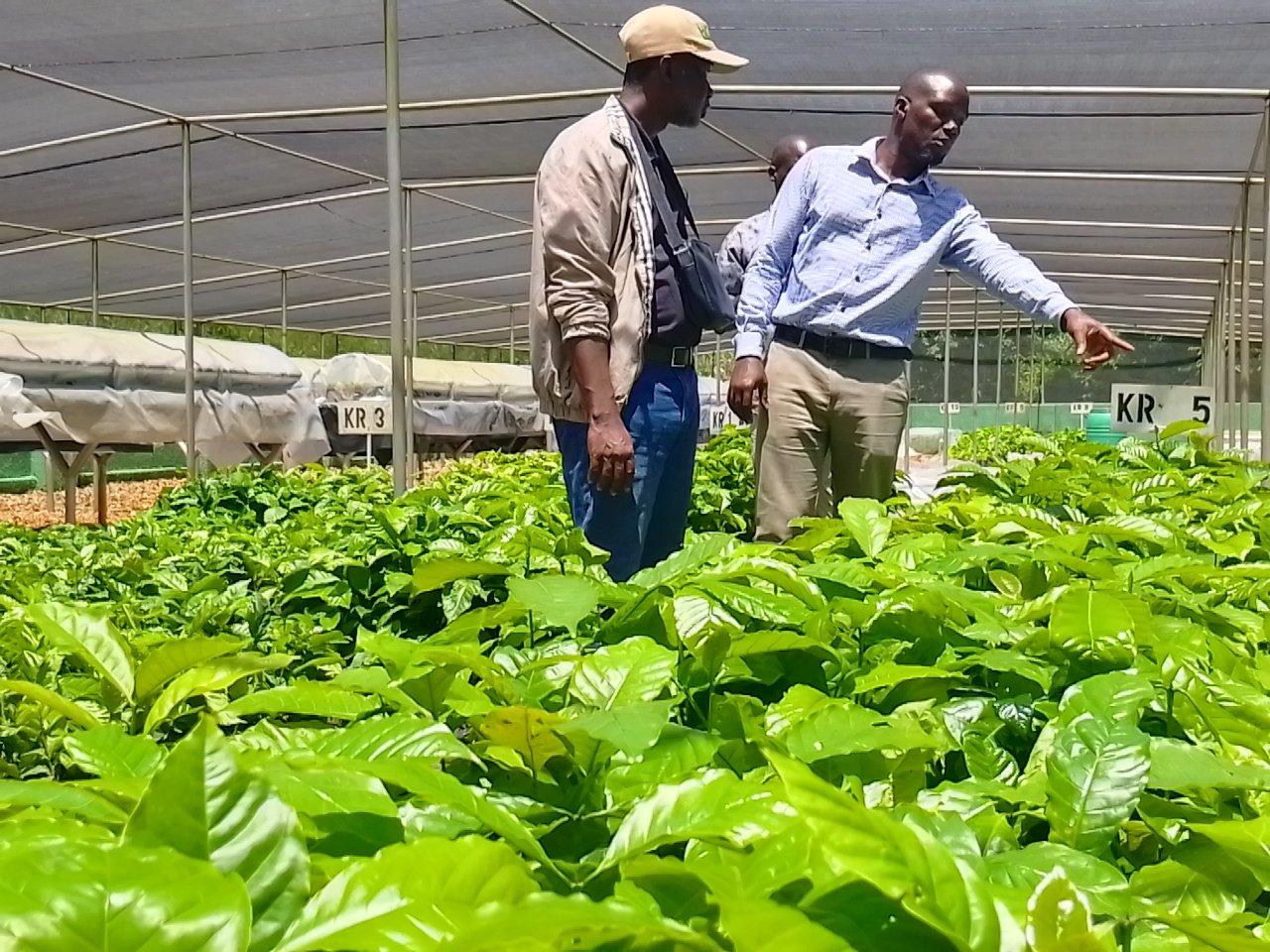
Researchers at the National Coffee Research Institute in Mukono are studying various wild coffee varieties gathered from natural forests in Uganda, including Kisansa, to identify unique traits from them. Key among these traits is their tolerance to drought. These will then be crossed with improved Robusta coffee varieties that will later be grown in greenhouses and other water-stressed areas to observe their performance. These unique genetic coffee materials may help in the reproduction and development of drought-resistant coffee varieties. Other areas of interest to the researchers are to establish additional significant characteristics for the coffee sector such as the quality of the cup (taste), resistance to pests and diseases. Much as Kisansa is a prospective commercial coffee variety, there is need for further studies into the species before recommendations are made to farmers.

Share This Article
Facebook Twitter Copy Link
Leave a comment

Leave a Reply Cancel reply

Your email address will not be published. Required fields are marked *

Recent Posts

  • Northern Uganda Farmers Urged to Embrace Research-Driven Technologies
  • Is kisansa coffee a ‘silver bullet’ to climate change challenges?
  • Inside Uganda’s Scientific Race to develop drought-resilient coffee
  • How Uganda’s NaCORI is redefining the future of coffee farming
  • NACORI CoCoDEV PROJECT Newsletter

Recent Comments

No comments to show.

You Might Also Like ↷

Inside Uganda’s Scientific Race to develop drought-resilient coffee

March 12, 2026

How Uganda’s NaCORI is redefining the future of coffee farming

March 12, 2026

NACORI CoCoDEV PROJECT Newsletter

March 12, 2026

How Uganda is Digitizing Coffee for Transparency, Traceability, and Higher Farmer Incomes

March 1, 2026
  • Advertise with us
  • Newsletters
  • Complaint
  • Deal
Stay tuned for a blend of captivating content that not only informs but also inspires you to navigate the ever-evolving landscape of technology, marketing, and market trends!
News
  • NaCCRI
  • NaCORRI
  • NaFIRRI
  • NaFORRI
  • NaLIRRI
  • NARL
  • NARO
  • NaSARRI
  • AbiZARDI
  • BugiZARDI
  • BuZARDI
  • KaZARDI
  • MbaZARDI
  • MuZARDI
  • NabuinZARDI
  • NgettaZARDI
  • RwebZARDI
5.2kFollowersLike
18.8kFollowersFollow
15.8kSubscribersSubscribe
Copyright © National Agricultural Research Organisation – NARO