

In a ground-breaking move to champion climate-smart agriculture and circular economic models, the National Forestry Resources Research Institute (NaFORRI) has officially launched an innovative project aimed at transforming hazardous agro-industrial waste into valuable agricultural inputs. The initiative, titled “Harnessing the use of Black Soldier Fly Larvae as a Low-cost Technology for the management of Avocado Oil Residue Organic Waste at Selected Processing Factories,” introduces a highly efficient biological solution to a growing environmental challenge.
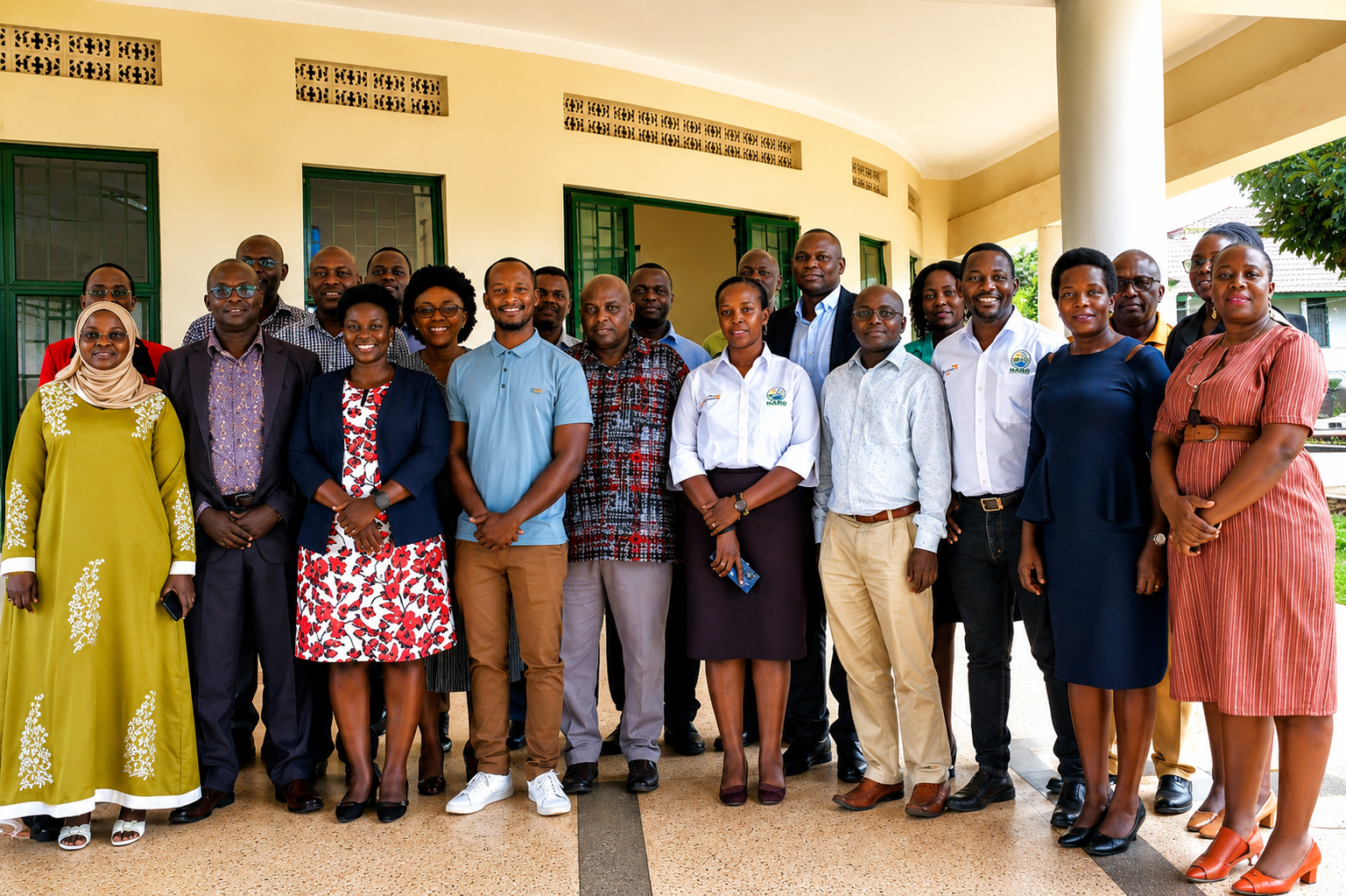
The project was inaugurated during a high-level stakeholder engagement meeting designed to bring institutional partners, private sector actors, and local governments onto the same page regarding the project’s key deliverables. Financed and monitored through the National Agricultural Research Organisation (NARO) Secretariat, the implementation timeline is set strictly for two years and eight months, prompting immediate field deployment.
Uganda’s agricultural landscape has witnessed an exponential increase in the cultivation of Hass avocado, a premium variety heavily promoted by the Ministry of Agriculture, Animal Industry and Fisheries (MAAIF) for both local consumption and international export markets. As farmers grade their harvests, top-tier fruits go to the fresh export market, while others supply local vendors or are directed into industrial processing plants for the extraction of premium extra virgin avocado oil. However, this commercial boom has brought a severe environmental bottleneck: processing factories generate massive volumes of organic waste residue. If left unmanaged, these residues degrade soil quality, create noxious odours, and emit greenhouse gases, posing localized environmental threats.
To curb this, the NaFORRI-led project introduces nature’s ultimate recycler: the Black Soldier Fly (BSF). These flies, which are non-pest insects natively available in Uganda, are renowned for being exceptionally fast decomposers of organic matter. The technological cycle is straightforward yet highly impactful: industrial factories extract avocado oil, and the remaining nutrient-rich organic residue is immediately channeled as primary substrate into Black Soldier Fly production units.
Speaking on behalf of the Director of Research at NaFORRI, Dr. Moreen Uwimbabazi emphasized that this strategy represents a paradigm shift in how agricultural by-products are viewed.
“We are utilizing a deeply innovative approach that converts waste into wealth for sustainable economic development. This project harnesses diverse scientific and industrial expertise to create tangible products and services. Our clear mandate is to ensure the project becomes impactful. Waste is the new currency in the circular economy which should be used for making money”, she said.
During the launch, the project’s Principal Investigator, Ms. Diana Namayanja, delivered a comprehensive technical presentation detailing the life cycle of the Black Soldier Fly and how its different developmental stages will be commercialized. The voracious larval phase will serve as a high-protein, cost-effective substitute for poultry feed formulation, providing a cheaper option for livestock farmers struggling with skyrocketing feed costs. Meanwhile, the nutrient-dense digestive by-product left behind by the larvae known as frass will be dried, processed, and packaged as nitrogen-rich organic fertilizer (ICOF).
A central pillar of the research will be executed at NaFORRI’s research facilities, where scientists will assess the growth performance and precise nutritive values of BSFL reared specifically on avocado residue substrates. This rigorous scientific auditing will give poultry and livestock farmers well-guided, data-backed recommendations on optimal feed combinations and application quantities. Furthermore, the processed frass fertilizer will be dried and handed over to the Mukono Agricultural Research and Development Institute (MuZARDI) for advanced trials in poultry feed integration and to test its efficacy in raising premium, high-quality Hass avocado seedlings and other critical plant species.
Dr. Hillary Agaba, the Head of the Grants Office at the NARO Secretariat, delivered an urgent call to action, reminding the consortium that with only two years and eight months allocated for execution, execution must be immediate and relentless. He emphasized that from the perspective of the Ministry of Agriculture, Animal Industry and Fisheries (MAAIF), success will be measured by three cross-cutting impacts: increased agricultural productivity, enhanced market access for the selected value chains, and a prompt, highly effective community-level response to climate change within the implementation zones.
He strongly encouraged the project implementation team to customize and deeply identify the specific productivity challenge that the BSF project is addressing, ensuring that when data is compiled at the ministerial level, NaFORRI actively contributes to macro-level national goals. “Ensure that the products that are being generated are of clear commercial value and immediately beneficial to the rural and urban communities at the project sites,” Dr. Agaba asserted.
Beyond technical and ecological milestones, the project promises immense socio-economic windfalls. By establishing localized ‘Innovative Platforms’ across rural and peri-urban communities, the initiative will catalyse job creation and set up alternative, highly resilient income streams. Local BSF farmers will be empowered to generate sustainable revenue by selling protein-rich larvae directly to commercial feed processors and livestock producers, while simultaneously utilizing or selling organic fertilizer.
Reflecting the collaborative spirit needed to tackle complex environmental issues, the project brings together a powerful cross-sectoral consortium. Spearheaded by scientists in NaFORRI, the implementing partners include the National Environment Management Authority (NEMA), Makerere University, MuZARDI, Buikwe District Local Government, Yeka Fly Organics enterprise, and Njojo Agro-based Industries. Private sector partners highlighted that the project directly solves their biggest industry bottleneck: securing a sustainable supply of quality substrate, without which the BSF biological production cycle breaks down. Geographically, the project’s primary interventions will be centred around major avocado oil production hubs in the districts of Kyegegwa, Buikwe, Nakaseke, and Kamuli.