

Jackfruit trees are a familiar feature across many Ugandan landscapes towering in homesteads, village roadsides, and quietly feeding families season after season. Yet behind this everyday presence lies a growing concern. Despite its nutritional, economic, and industrial potential, jackfruit remains largely under researched, unconserved, and increasingly threatened.
In 2025, National Agricultural Research Organization (NARO), under the National Forestry Resources Research Institute (NaFORRI), took a decisive step to change that narrative. Through Phase 1 of the BOLD WP7 project (Building Opportunities for Lesser-Known Diversity in Edible Resources) scientists began laying the foundation for the long-term conservation and sustainable use of jackfruit in Uganda and across Africa.
Planting the Seeds of Conservation
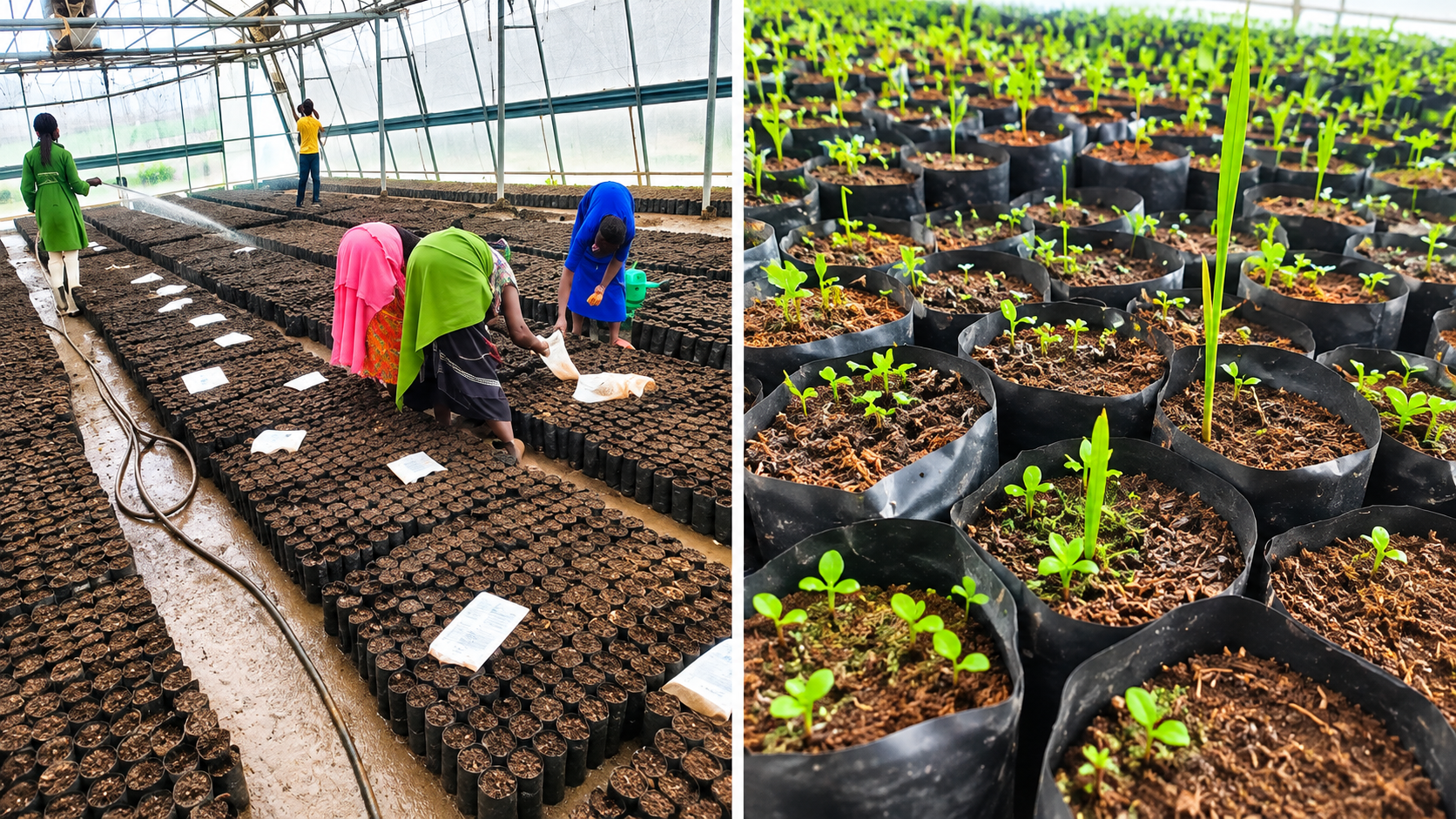
At the heart of the project was a clear mission: to secure genetically diverse jackfruit planting material before it is lost. Working in partnership with CIFOR-ICRAF, NaFORRI received jackfruit seeds from Kenya, Tanzania, Ghana, and Cameroon. In total, 122 seed families were obtained from these four countries, adding an important regional dimension to the effort.
At the same time, NaFORRI scientists crisscrossed Uganda, engaging farmers and collecting jackfruit seeds from diverse agro-ecological zones. By the end of the reporting period, 126 locally adapted Ugandan jackfruit families had been collected forming an unprecedented step toward building a national and regional jackfruit conservation platform.
All seeds were carefully sown and managed under controlled greenhouse conditions at NaFORRI. Early germination results have been promising, confirming that jackfruit can be successfully regenerated by seed through nursery-based systems. Duplicate Ugandan samples were also sent to CIFOR-ICRAF in Nairobi for genetic diversity analysis, strengthening continental research collaboration and ensuring the data contributes to Africa-wide understanding of jackfruit diversity.
Communities at the Core
Farmers were not just contributors of planting material; they were partners in knowledge. Women, in particular, played a central role in identifying different jackfruit ethno-varieties. Their day-to-day involvement in food sourcing, preparation and household nutrition gave them deep insight into fruit characteristics such as taste, texture, and cooking quality.
Engagement was not without its challenges. In parts of central Uganda, some farmers were hesitant to sign Prior Informed Consent forms. Addressing these concerns required time, patience, and clear communication. While this slowed field activities, it ultimately strengthened trust and reinforced NARO’s commitment to ethical, transparent research.
Early Impacts with Long-Term Promise
Beyond seed collection, the project delivered important early outcomes. Researchers gained new insights into jackfruit diversity, distribution, and community perceptions. Farmers’ awareness of jackfruit’s nutritional and economic value increased, and long-standing challenges such as tree loss for fuelwood and disease pressures were documented for future intervention.
Most importantly, the successful germination of both local and international seed collections has raised confidence in establishing a replicated international field gene bank of jackfruit in Uganda. Once established, this gene bank will serve as a long-term resource for breeding improved varieties, supplying germplasm, supporting value chain development, and enhancing household nutrition and rural incomes.
Navigating Challenges, Adapting Solutions
Implementation was not without hurdles. Delays in contracting and fund release compressed timelines, while international seed shipments faced customs delays and quality losses particularly for seeds collected late in the season or held too long in transit. Ghanaian seed lots, which arrived more mature, performed notably better and even began germinating during shipment.
These experiences underscored the need for improved seed handling protocols, timely funding, and better coordination with international partners, lessons that will inform future phases of the project.
Building on Existing Strengths
NaFORRI is not starting from scratch. Complementary government-funded initiatives are already underway, including research on jackfruit grafting, post-harvest handling, and value addition in partnership with other NARO institutes, Makerere University and private-sector actors. A one-acre trial plot off grafted trees and a five-acre national gene bank are already established, ensuring that conservation efforts are closely linked to utilization and commercialization.
Looking Ahead
Phase 1 of the BOLD WP7 project focused on seed collection and nursery establishment but this is only the beginning. With germination underway, the next critical step is field establishment, which will require sustained investment and timely land preparation.
If supported, this initiative has the potential to transform jackfruit from an underutilized backyard tree into a strategic national and regional asset supporting climate-smart agriculture, diversified food systems, and resilient livelihoods.