
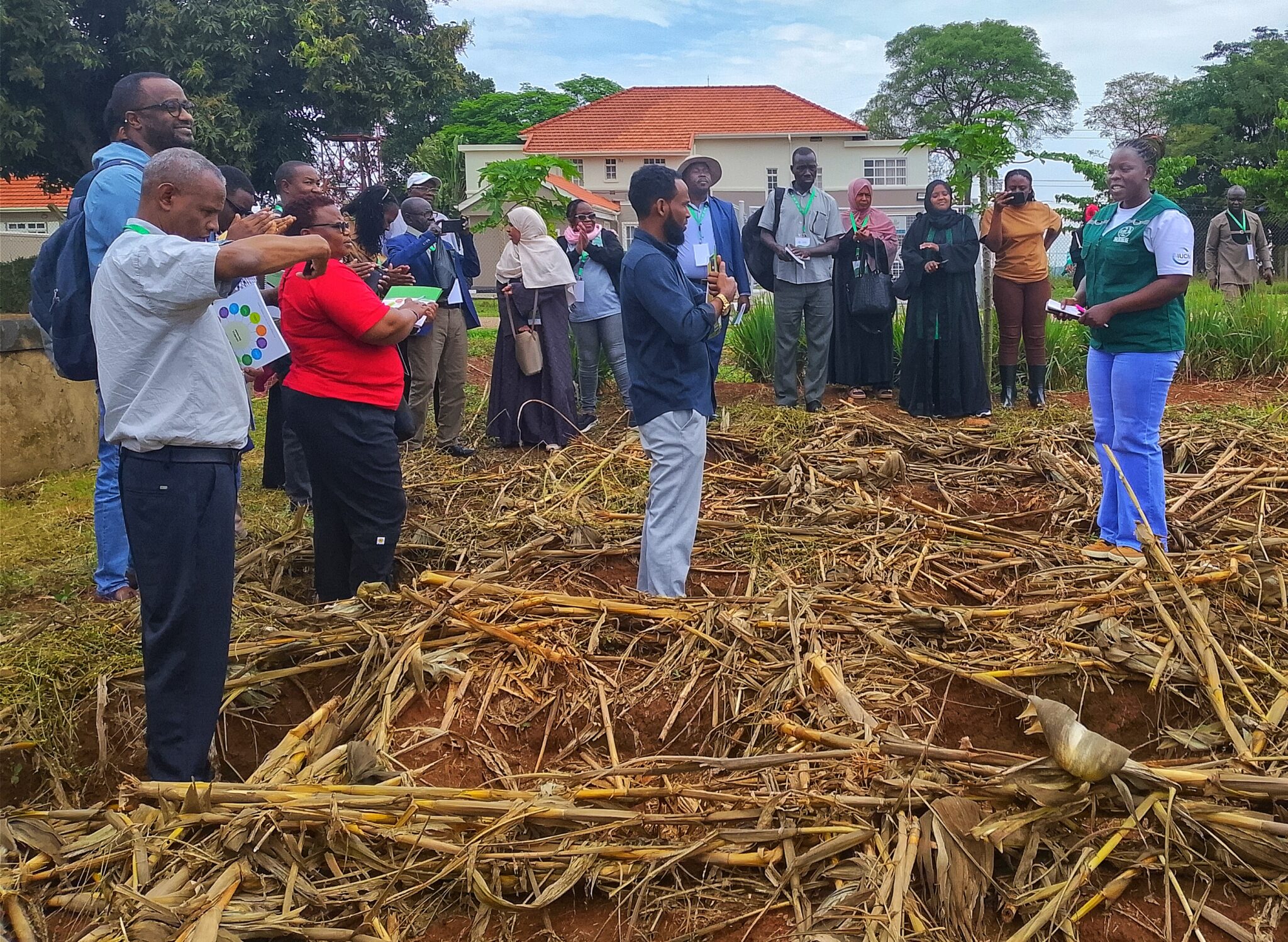

The Permanent Secretary in the Ministry of Agriculture Animal Industry and Fisheries (MAAIF) has commended NARO NARL Kawanda for hosting the Intergovernmental Authority on Development (IGAD) delegation working on Fertilizer and Soil health hub. The delegation visited the National Agricultural Research Laboratories Kawanda climaxing the four day meeting in Uganda under the theme of advancing soil health and fertilizer use for resilient food systems in the IGAD region.
Speaking on behalf of the Permanent Secretary (PS) in MAAIF, Mr.Alex Bamboona the Assistant Commissioner for Food Nutrition Security observed that “Soil health is very important. Kawanda is a perfect example of crosscutting agricultural Research from Soils, Biodiversity, Agro- Machinery and Value addition of food”.
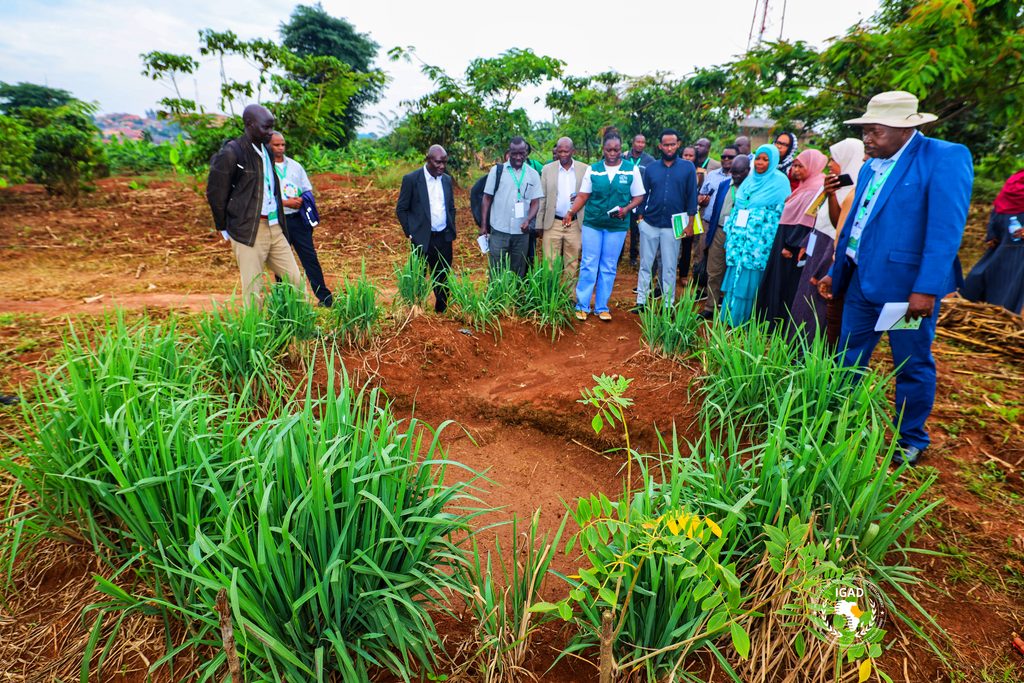
Head of the IGAD delegation Mr. Denis Kibuuka who led the 7 Member States delegation including Djibouti, Ethiopia, Kenya, Sudan, South Sudan, Somalia and Uganda; along with technical partners, noted that “We want to see the Science. We have been talking Science in the last 3 days’ meeting and we want to see it now in Kawanda. Member states will learn and take home the cross learning”, he observed.
He was grateful for the support from the technical partners for the IGAD soil
Mapping of IGAD and Uganda so that is on-going. Forum for Agricultural Research in Africa (FARA), Association for Strengthening Agricultural Research in East and Central Africa (ASARECA) and CARDESA were among the technical partners .
The Director of Research at NARO NARL Kawanda Dr. Robooni Tumuhimbise told the delegates that NARL’s crosscutting mandate works through programs that equally support other NARO Institutes. Observing that NARO has 16 Institutes around the country, some with a zonal mandate and others with National mandates for specific research objectives that contribute to the vision of NARO. Noting that NARO is the Research Agency of MAAIF just like KARLO conducts agricultural research in Kenya.
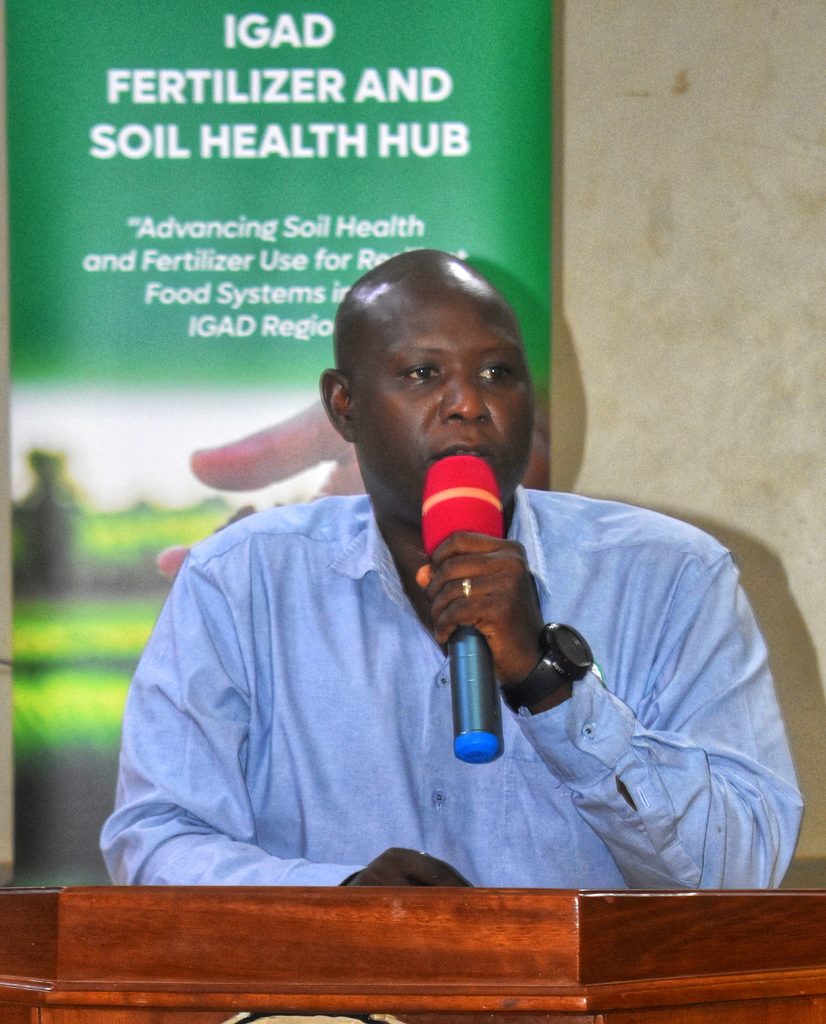
He said that “NARL was established in 1937 and is the oldest NARO Institute. We have four core programs including Biosystems and Agricultural Engineering, Biodiversity and Biotechnology, Food Biosciences and Agribusiness and the Soils, Environment and Agro- metrology”.
An overview of work done by the Soils program was presented by Dr. Onesmas Semalulu the Program Leader of the Soils, Environment and Agro- metrology program thereafter a practical excursion of the Soils and ecosystem management practices was done. The team was shown soil conservation demonstration gardens, Banana plantation and coffee plantation as the main focus of the practical learning.
An exhibition booth showcasing various technologies was displayed by the Soils Program Scientists and Engineer s from the Bio-systems and Agricultural mechanization team.
- Soil Mapping and its secondary products such as the suitability and capability maps where farmers and other stakeholders can utilize the information to make proper decisions on the type of crops required on their farms given the types of soil and suitability class of a given soil.
- Fertilizer blends and rates for given crops which helps farmers to apply the right fertilizers and the right rates to avoid losses and wastage by applying wrong fertilizers and wrong rates to a given crop.
- The exhibition also show cased the bio char technology as a carbon sequester and soil fertility booster.
- The technology made by the Biosystems and Agricultural Engineering program of NARL showed how agricultural waste can be used to enhance soil structure for easy penetration of fertilizer nutrients and water utilization in the field.
- Agro-metrology unit of the Soils, Environment and Agro-metrology demonstrated the seasonal characteristic tool which predicts the weather forecasts that guides farmers on when to plant depending on the specific moisture requirements for specific crops.
From the Private sector players in soil health and fertilizer, Agape innovations LTD exhibited different organic fertilizers, soil moisturisers like Hydrogels, rhizobia, Agricultural lime, Black Soldier Fly – BSF residues used as fertilizer. JB innovations exhibited value addition generating flour of their produce from rice, corn and soya for composite flours.
In the field Dr. Nankya Eseri a senior Soils Scientist of NARO demonstrated different climate smart technologies including mulching in coffee and bananas.
Sustainable Land Management SLM technologies which included the ZAI pit technology which supports precision application of resources such as fertilizers and water among others. Water infiltration trenches were show cased at the field excursion including grass strips of fodder species like Brachiaria, Napier and Hedgerows of legumenous species like Calliandra, Flamingia and Leuceana. The use of trash lines, water infiltration pits were demonstrated in the fields around the Institute.
It is apparent that soil health is a key sector in Agriculture. From the voices of the delegates, boosting soil health and food systems is one of the approaches to adopt Integrated Soil Fertility Management (ISFM). This in turn integrates a number of practices ranging from Sustainable Water Conservation (SWC), agronomy, soil testing, among others, to increase production and productivity.
The IGAD Soil health Hub has six priority areas which are Policy and Advocacy support, Capacity strengthening, Soil Information systems and ISFM, Research and innovation, Markets, trade and supply and Resource mobilization and partnership.
The meeting was organized by IGAD through the Food Systems Resilience Program (FSRP).