
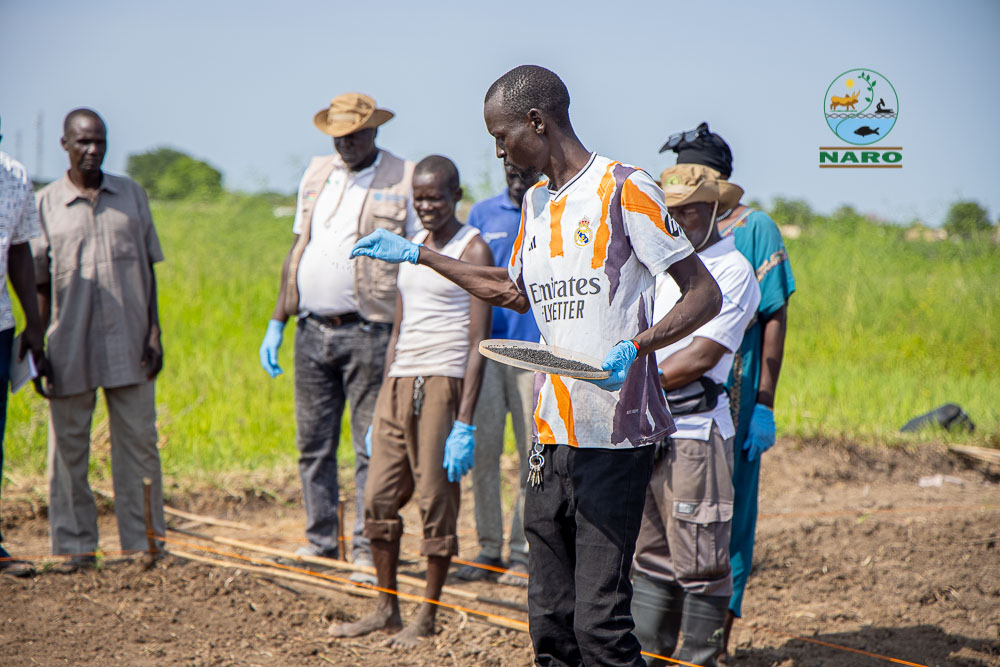

In Northern-western South Sudan, Aweil State was once celebrated as the country’s undisputed rice basket. Decades of conflict, displacement, and economic instability severely degraded local seed systems, leaving smallholders reliant on low-yielding, uncertified grains and traditional practices. Today, a strategic cross-border partnership is turning the tide.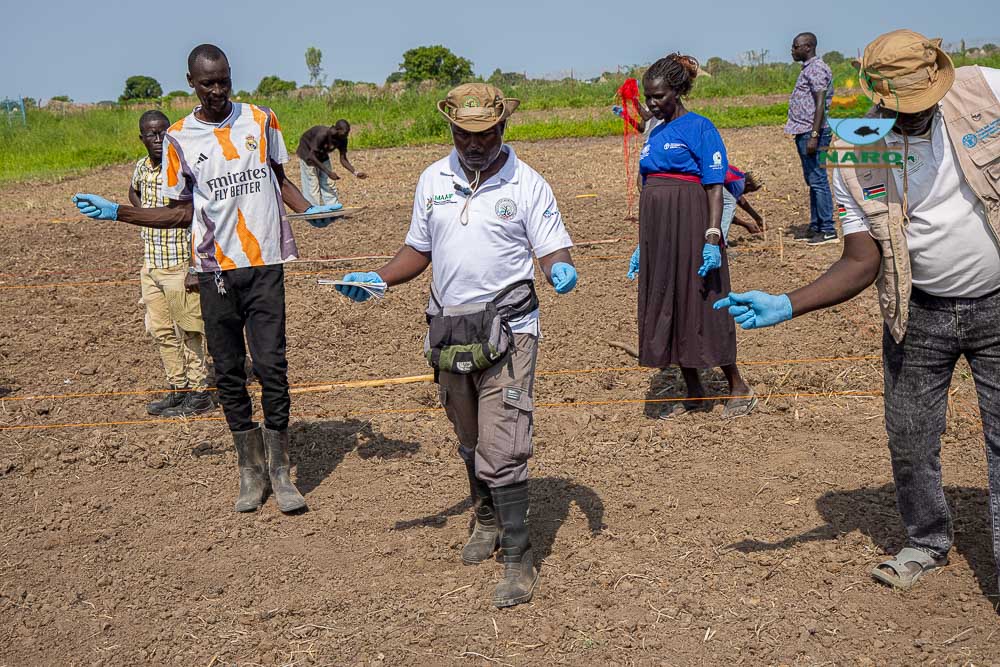
Uganda’s National Agricultural Research Organisation (NARO), in collaboration with the Food and Agriculture Organization (FAO) and South Sudan’s Ministry of Agriculture and Food Security (MAFS), is spearheading a transformative initiative to rebuild Aweil’s agricultural self-sufficiency. Executed under the six-year Climate-Resilient Agriculture for Inclusive Value Chains (CRAFT) project, this intervention pairs high-quality seed distribution with rigorous technical capacity-building to anchor long-term food security.
To solve food insecurity at scale, access to high-yielding, resilient seed systems is non-negotiable. Under CRAFT’s initial implementation phase, the project targets the production of 397 tonnes of certified rice seed. Distributed by the FAO directly to local farming communities, these quality seeds are projected to generate 25,000 tonnes of rice grain. Beyond boosting immediate grain supply, the initiative builds decentralized seed networks so local institutions can independently maintain, certify, and distribute high-performing seed stocks for generations to come.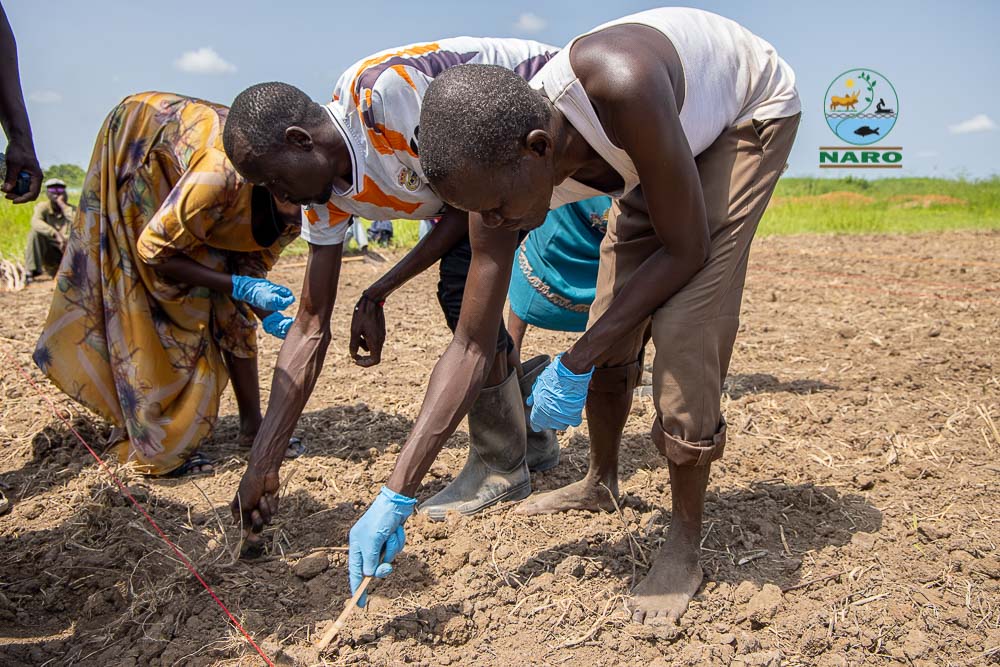
Spearheaded by the National Crops Resources Research Institute (NaCRRI) Cereals Programme, NARO’s core strength lies in breeding, seed production, and institutional capacity building. According to Dr. Jimmy Lamo, Principal Investigator and Head of NARO’s Cereals Programme, NARO has already established 120 acres dedicated to foundation seed production, featuring BR4, a popular, high-performing variety in the Bahr el Ghazal region.
This intervention began by cleaning local seed varieties currently grown in the area. The next phase will introduce superior varieties already released across East Africa, which are currently in advanced stages of regional release under East African Community (EAC) frameworks.
This regional alignment offers a vital mechanism for cross-border support, particularly when climate stresses and displacement force communities across national boundaries. Supporting farmers directly at their location creates a global stability advantage. The intervention is already yielding tangible results: farmers trained during earlier phases are now actively cleaning seed stocks and supplying them to neighboring irrigation schemes. Beyond the Aweil Rice Irrigation Scheme, the project has expanded its operational footprint to Jonglei State (Bor) and Eastern Equatoria State (Magwi and Torit). Supported by the African Development Bank (AfDB) and South Sudan’s Ministry of Agriculture and Food Security, NARO plans to scale this collaborative model across additional agricultural commodities.
Bridging Theory and Field: Capacity Building in Action
Sustaining a rice boom requires more than distributing seeds, it demands deep, localized agronomic expertise. To bridge theory and field practice, NARO and Uganda’s Ministry of Agriculture, Animal Industry and Fisheries (MAAIF) conducted intensive, multi-day capacity-building workshops for South Sudanese extension staff, lead farmers, and ministry personnel at the BCH Hotel in Aweil State.
Dr. Jimmy Lamo facilitated training on sustainable rice production and Good Agronomic Practices (GAP). To promote a commercial mindset among farmers and extension staff, he demonstrated how to conduct detailed cost-benefit evaluations across all operational phases. From a seed-centric perspective, Dr. Lamo emphasized that certified, high-quality seed serves as the baseline determinant for both yield potential and overall resource efficiency. Investing in high-purity varieties with high germination viability ensures uniform crop establishment, lowers seed rate wastage, and provides built-in genetic resilience against prevalent regional pests and climate stresses. Ultimately, while certified seed requires a modest upfront investment, its superior vigor optimizes fertilizer response and maximizes grain yields, drastically lowering the unit cost of production and unlocking higher gross profit margins for farmers.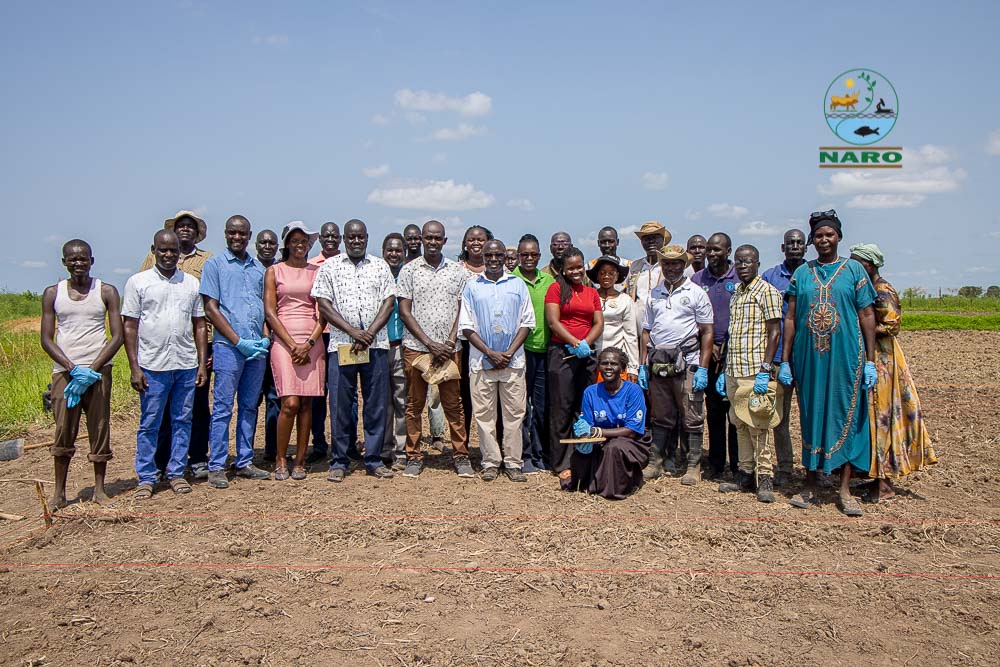
Soil Specialist Francis Ogwang turned theory into practice during interactive field modules on soil and water management. Through lively peer exchanges, participants evaluated traditional farming methods against science-backed standards. The sessions demonstrated how switching from scattered broadcasting to precise line planting improves plant spacing, reduces seed waste, simplifies weeding, and drastically boosts yields. Ogwang also provided practical guidance on organic versus synthetic fertilizers, accurate dosage rates, moisture-retention techniques, and hands-on instruction in operating mechanical planters for effective weed management.
To establish seed purity and uphold quality standards, MAAIF seed inspection and certification experts Norah Nabachwa and Adrine Agaba guided local extension staff through the rigorous protocols required for formal seed certification. Moving beyond basic farming techniques, this specialized module equipped officers with diagnostic skills to maintain genetic integrity across every stage of the seed cycle. Training encompassed field inspection and rogueing to eliminate “off-types” in Open-Pollinated Variety (OPV) rice fields, laboratory proficiency exercises at Aweil’s FAO-supported seed facility; including moisture content analysis, physical purity testing, and germination trials, and post-harvest protocols for proper drying, preservation, and long-term storage.
Regional Impact and Leadership Alignment
Opening the proceedings on behalf of the Minister of State for Agriculture, Mr. Gabriel Wek Jongkor, Director of Agriculture, emphasized that technical capacity is the missing link needed to transform South Sudan’s agricultural potential into national food security.
The political and operational commitment was highlighted by the active participation of Hon. Akol Wol Wawien, Minister for Livestock, who attended the technical sessions in his dual capacity as a progressive farmer. While observing practical seed-testing demonstrations at the Aweil facility, Hon. Wawien noted how science directly demystifies yield gaps, recalling Aweil’s historic status as an agricultural powerhouse.
“Restoring local seed quality is the fundamental key to regaining our agricultural self-sufficiency. Multi-agency collaboration and continuous knowledge transfer will turn Aweil back into the breadbasket of South Sudan.”
Hon. Akol Wol Wawien, Minister for Livestock & Progressive Farmer
By pairing Uganda’s scientific expertise with South Sudan’s vast agricultural potential, NARO and its partners are laying down a sustainable, climate-resilient framework, ensuring that Aweil’s rice fields do not just recover, but thrive.