
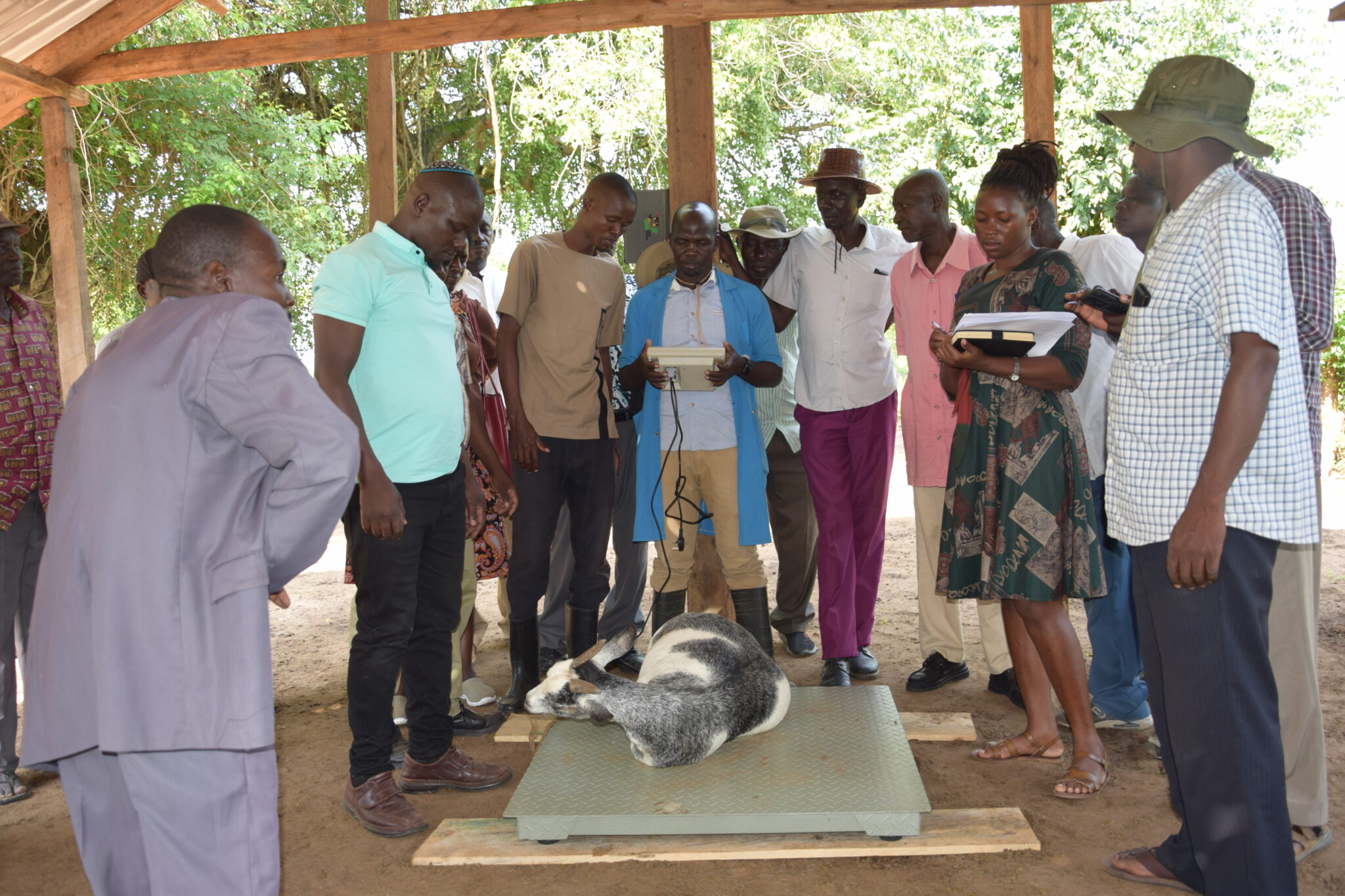

Goats are an essential part of rural life in Uganda. They provide meat, milk, skins, and other by-products, and serve important sociocultural functions. Despite their significance, goat farming in the Bunyoro region continues to face several challenges. Chief among them is the prevalence of poor-quality breeds, which limit productivity and profitability.
In light of these constraints, NARO Bulindi in collaboration with the Association for Strengthening Agricultural Research in Eastern and Central Africa (ASARECA) and international partners, specifically the International Centre for Agricultural Research in the Dry Areas (ICARDA) and the International Livestock Research Institute (ILRI), has launched a Community-Based Breeding Programme (CBBP) to transform goat production in the region.
This initiative is supported by the Accelerating Impacts of CGIAR Climate Research for Africa (AICCRA) project. The programme is being piloted with two farmer groups: the Buseesa Livestock Farmers’ Association in Matale Sub-County, Kibaale District, and the Kirama Goat Breeders’ Association in Kigwera Sub-County, Buliisa District. By promoting community-led selective breeding, the CBBP aims to strengthen indigenous goat genetics, improve productivity, increase household incomes, and enhance resilience to climate change.
CBBP: Unlocking productivity through selective breeding Speaking at the project’s inception, Ms. Barungi Julian, ASARECA Programme Officer for Policy, described the CBBP model as a proven and sustainable approach for boosting goat production.
This technology has delivered results in over 25 countries, improving productivity and transforming livelihoods,” she said.
Ms. Barungi emphasised
But success depends on farmers applying the knowledge they receive. I urge you to put what you learn into action
Ms. Barungi emphasised
Dr. Aynalem Haile, Principal Scientist at ICARDA and a leading expert in the CBBP model from Ethiopia, cautioned against relying on the cross-breeding of indigenous goats with exotic breeds, a common practice across Africa.
“Many governments have heavily invested in cross-breeding programmes involving exotic breeds,” he observed. “Although there are pockets of success, these efforts often fall short because the introduced breeds are poorly adapted to local conditions.”
He also challenged the popular belief that larger animals are inherently superior. “There’s a misconception that bigger is always better,” he said. “In reality, what we need are well-selected indigenous breeds that thrive in local environments, and that’s precisely what the CBBP model promotes.”