
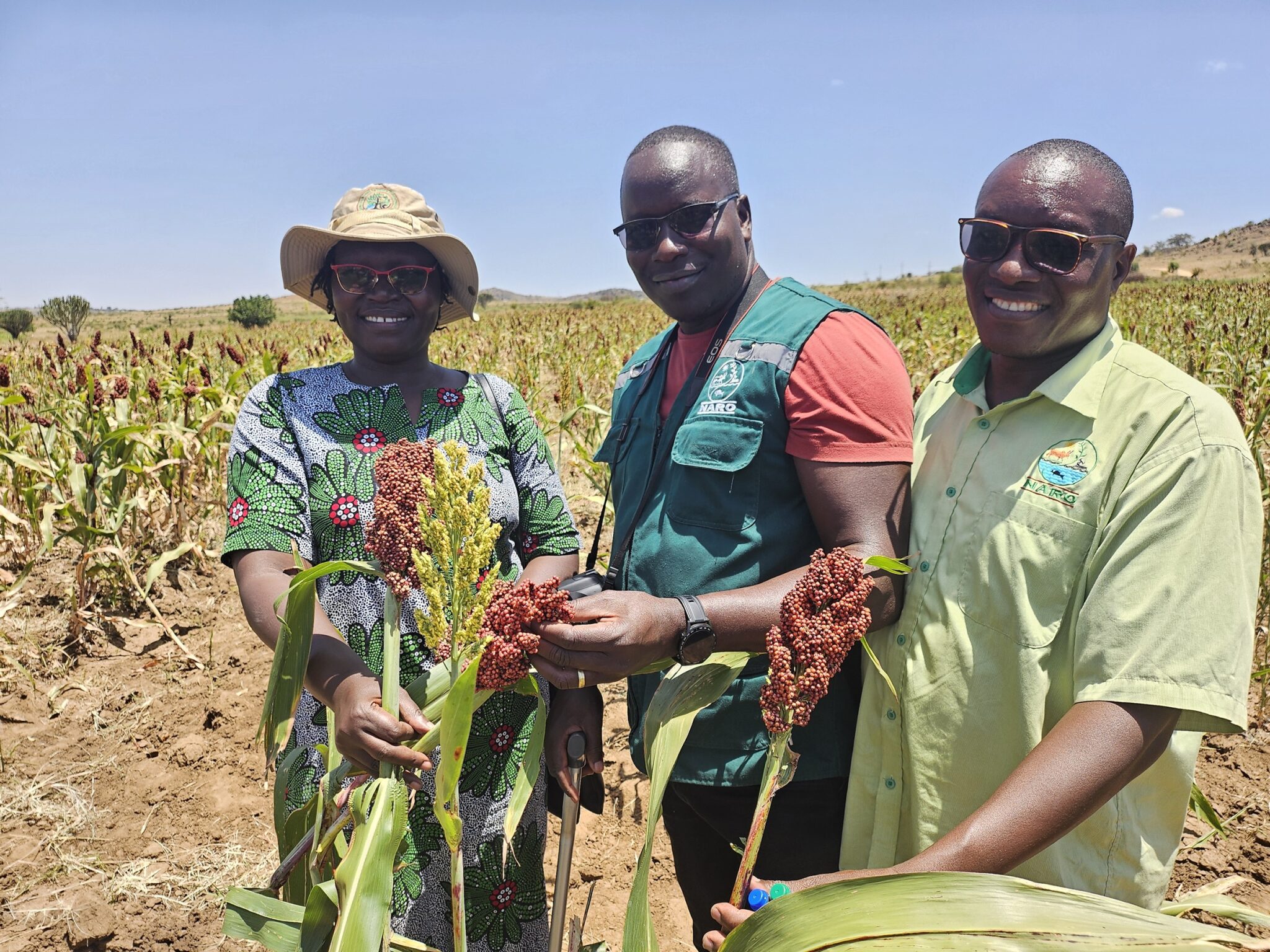

As drought pushes thousands of families in Karamoja deeper into food insecurity, a sorghum variety developed by the National Agricultural Research Organisation (NARO) is defying the harsh conditions, raising fresh hope that farmers can still produce food when the rains fail.
The crop, NARO Sorghum 2, commonly known as NAROSORG2, was developed by the National Agricultural Research Organisation (NARO) specifically to withstand harsh climatic conditions.
The early-maturing variety has performed well in demonstration gardens established across the subregion, including a five-acre demonstration in Katile Sub County, Kaabong District.
“It is early maturing, it is drought tolerant, it can withstand extreme drought and still give you some good degree of yield,” said Dr Walter Odongo, Director of Research at NARO’s Nabuin Zonal Agricultural Research and Development Institute (ZARDI).
Dr. Odongo said NAROSORG2 also addresses another major challenge of predatory birds faced by sorghum farmers in the region.
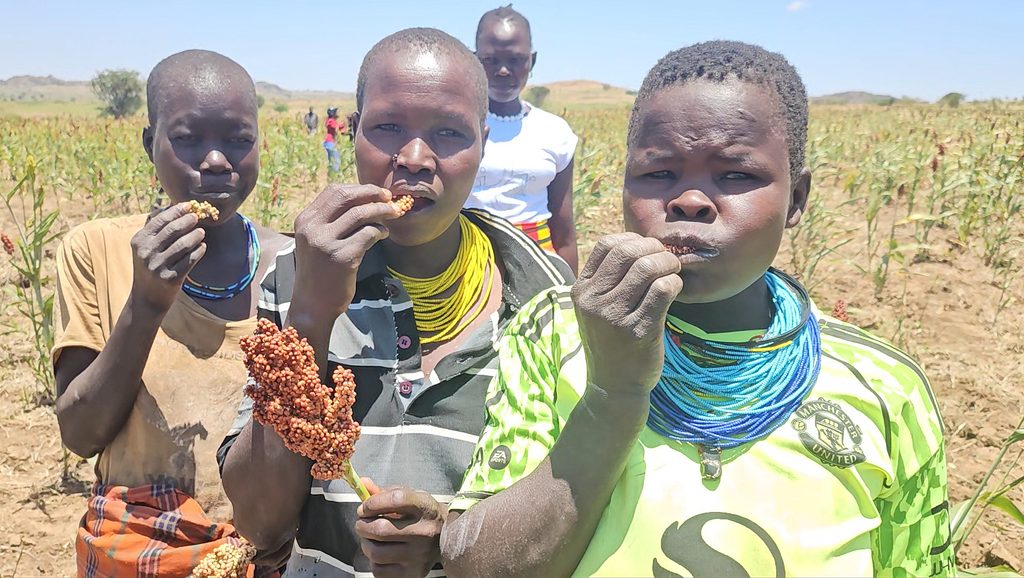
“The third strong attribute about this sorghum variety, and which excites the farmers most, is that this variety of Sorghum is not eaten by birds, which are a very common production constraint within the region” He said.
He was speaking during a farmer’s field day held at a five-acre demonstration farm in Katile Sub County, Kaabong District early this week.
The Katile demonstration is part of NARO’s efforts to promote agricultural technologies adapted to the semi-arid conditions of Karamoja.
The demonstration was established in collaboration with Kaabong District agricultural extension staff, with farmers participating throughout the production process, from land preparation and planting to crop management.
The approach is intended to enable farmers to see first-hand how the technology performs under their own conditions.
“It has been important to showcase to the farmers that it is possible with improved technology from NARO for production to be done in the dry agroecologies,” Dr. Odongo said.
Dr Ijara Anthony Raphael, a Senior Research Officer at NARO, said the organisation established parish-level demonstration gardens across the six districts of Karamoja to help farmers identify technologies and practices suited to the region’s changing climate.
The gardens, measuring between five and 10 acres, provide learning sites where farmers can compare technologies, planting dates and management practices.
“Karamoja is challenged by hitting droughts. Our minds are triggered at getting technologies which can ensure food security and income for the Karamoja people,” Ijara said.
He revealed that NAROSORG2 takes about 80 days from planting to maturity under the conditions in Karamoja and this can provide faster food for populations.
He said the demonstrations are also intended to enable farmers to access seed and eventually multiply the technology across the region.
Kaabong District LCV Chairman Lotyang Albert Loris said the impact of the drought on communities in the district has been severe.
“There is no doubt that our people are suffering. They have no food. And it is not because of laziness, but the weather conditions can be so harsh,” Loris said.
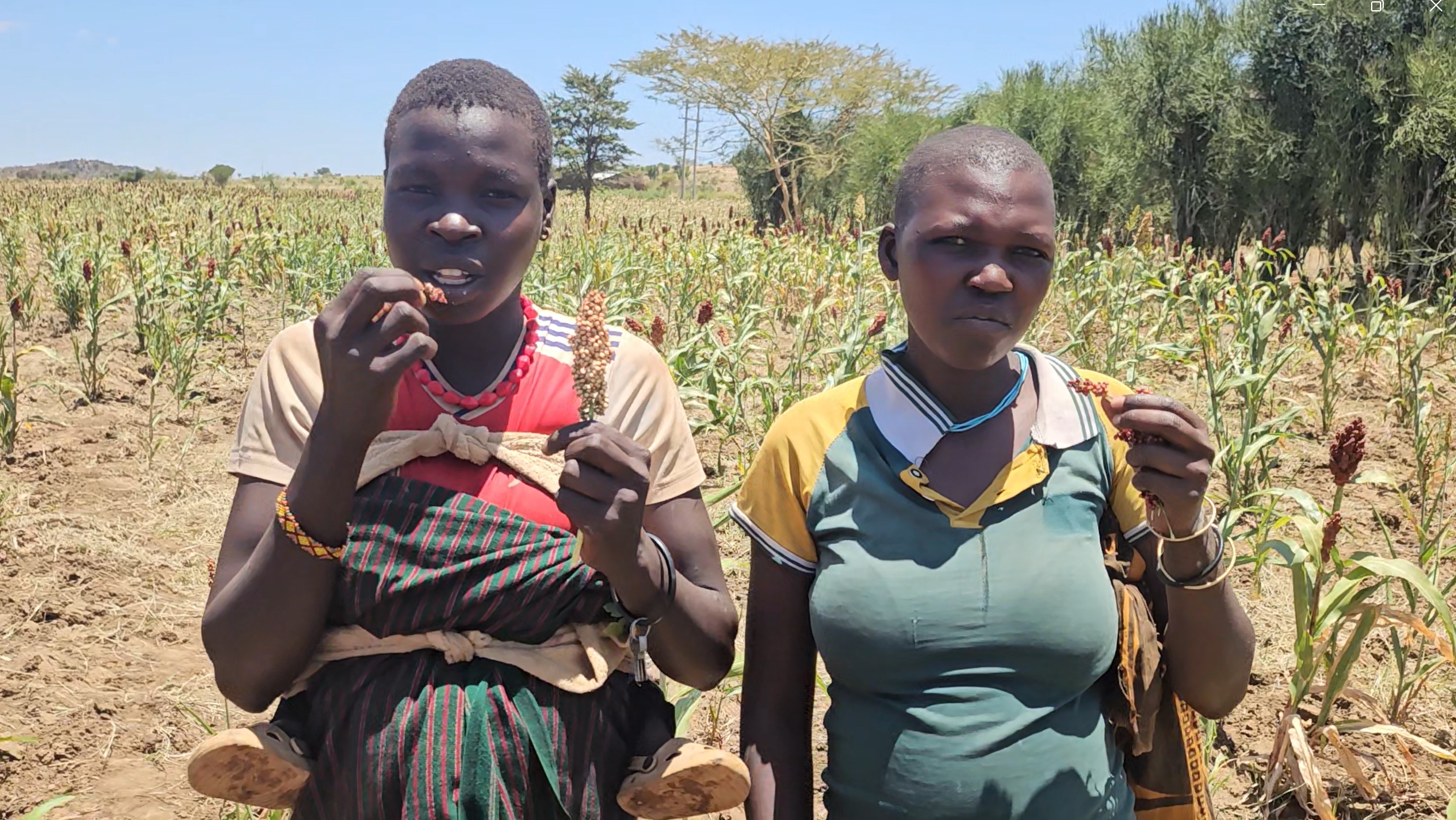
Loris commended NARO for the technology, noting that the short maturity period of NAROSORG2 could provide farmers with additional opportunities to produce food within a year.
“Looking at the fast maturity of this crop, people would even be able to introduce a second harvest season in a year. This is phenomenal,” he said.
Dr Damalie Akwango, Coordinator of the Uganda Climate-Smart Agriculture Transformation Project (UCSATP) at NARO, said the intervention in Karamoja goes beyond demonstrating varieties.
NARO is also supporting seed multiplication so that farmers can access planting materials for crops such as sorghum and cassava.
“Under the project, we are promoting early maturing varieties to try to reduce food insecurity in this region and also improve their household income,” Akwango said.
The strategy is to move farmers from simply coping with drought to adopting technologies and practices that allow them to continue producing despite climatic shocks.
For extension worker Miriam Akitwi, the performance of the crop has made a strong impression on farmers.
“We have worked on this demonstration farm together with the farmers right from the time of land opening up to the level where we are able to see this good yield that is ready for harvest,” she said.
She added that farmers were particularly encouraged because the crop had performed despite the difficult weather conditions.
“They are appreciating NARO SORG 2 as a rare variety,” Akitwi said.
Mr. Apui John Baptist, a local farmer observed that the difference between NAROSORG2 and the sorghum varieties traditionally grown in the area is already visible.
“This is a good variety which can manage the conditions in Karamoja better than the one we have been growing,” he said.
He said the crop matures faster and manages the strong sunshine experienced in the region.
“My message to the Government and NARO is that we are happy. As a farmer, I’m happy to the team for having brought this type of sorghum to us,” Apui said.
The ambition is for farmers to take the seed and knowledge from the demonstration plots back to their communities, expanding production across the region.
Media Contacts
Frank Mugabi
Senior Communications Officer Plot 11-13 Lugard Avenue, | P.O Box 295, Entebbe | 0414 320341/0772 576473| Website: www.naro.go.ug | X: @narouganda