


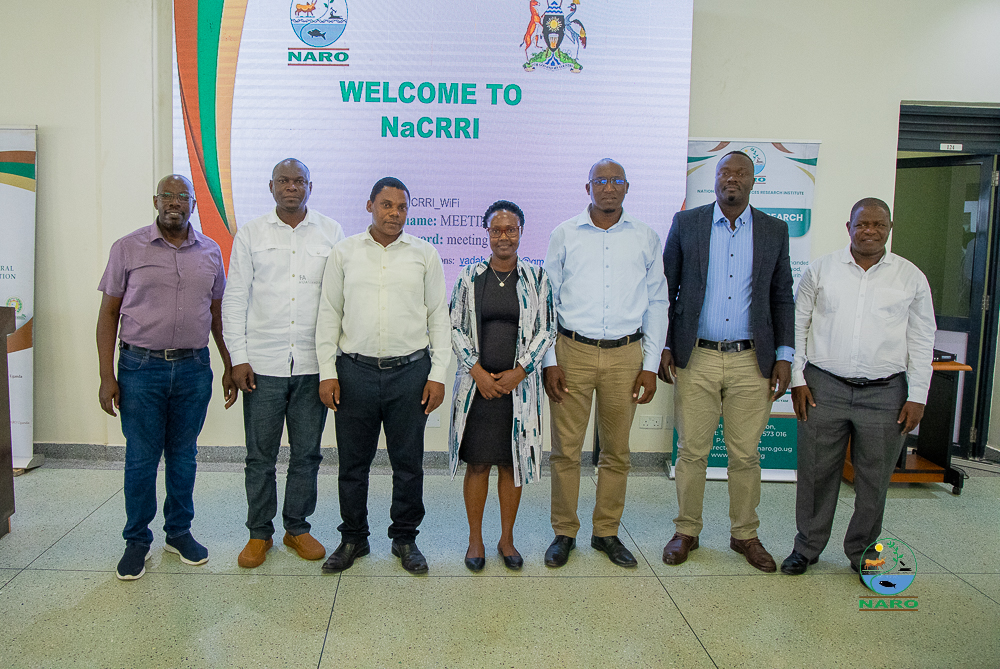
At the Root Crops Conference Hall in Namulonge, a subtle yet profound shift unfolded on August 20, 2026. As Plant Breeders and Leadership gathered for the inception meeting of the National Agricultural Research Organization (NARO) Plant Genetic Improvement Action, the atmosphere was defined by a shared sense of urgency. The two-day convening was more than a routine administrative check-in; it signaled a decisive departure from traditional, science-centric research toward a market-driven model designed to serve industry demand and propel Uganda’s economic growth.

Supported by dedicated funding from the Government of Uganda for the 2026/2027 financial year, this national initiative approaches plant genetics as an economic engine. Governed by a unified vision, NARO’s scientists are targeting four interconnected priorities that bridge the gap between smallholder fields and commercial supply chains. They are breeding high-yielding, climate-resilient food crops, while simultaneously developing nutritious pastures to support a growing livestock and dairy industry. Crucially, the initiative accelerates the commercialization of high-value industrial crops specifically Hass avocado, macadamia, cashew nuts, and bamboo while systematically profiling Uganda’s native coffee genetic resources to protect and enhance the nation’s premier export brand.
What distinguishes this action plan is its focus on market orientation and operational efficiency. Coordinated by the National Crops Resources Research Institute (NaCRRI), the initiative unites a nationwide network of National Agricultural Research Institutes (NARIs) and Zonal Agricultural Research and Development Institutes (ZARDIs). From Buginyanya, Bulindi to MuZARDI, Rwebitaba, and KaZARDI, breeding teams across diverse agro-ecological zones are aligning their programs directly with industrial needs. By leveraging artificial intelligence, pooling shared genetic data, and establishing rigorous peer-review standards, these cross-institutional teams are significantly shortening the pipeline from initial cross-breeding to commercial release.
The long-term impacts of this industry-aligned strategy extend across the entire value chain. Farmers receive climate-resilient crop varieties tailored to the precise traits’ processors, exporters, and consumers demand ensuring steady market access and higher farmgate prices. Agribusinesses gain access to reliable, high-quality raw materials for processing, value addition, and export, while livestock producers benefit from improved forage varieties that raise meat and dairy productivity. Furthermore, by safeguarding the natural capital of native coffee, Uganda preserves the biological foundation of its most lucrative commercial crop.
By combining modern genetic tools with clear market incentives, NARO’s Plant Genetic Improvement Action establishes a practical blueprint for agricultural transformation delivering smarter, market-ready science to build a stronger, more competitive Uganda