
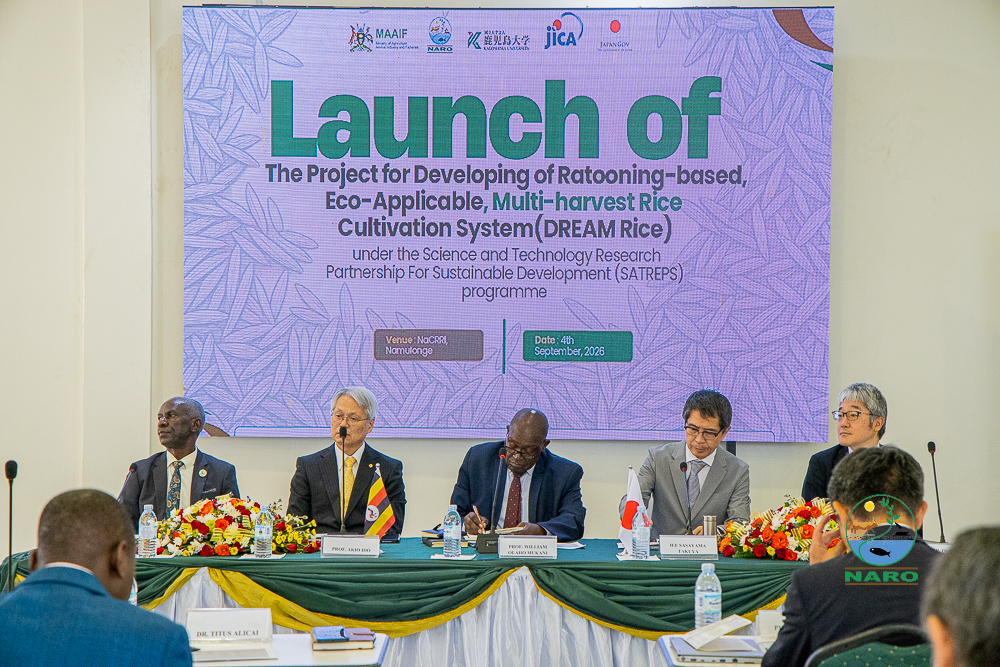

The launch of the five-year Science and Technology Research Partnership for Sustainable Development (SATREPS) DREAMRICE initiative at Uganda’s National Crops Resources Research Institute (NaCRRI) marks a major shift in African cereal production. Officially titled Development of Ratooning-Based Eco-applicable Multi-harvest Rice Cultivation System (DREAM RICE), the project represents the first SATREPS initiative implemented in Africa. Implemented by the National Agricultural Research Organisation (NARO) alongside Japan’s Kagoshima University and the Japan International Cooperation Agency (JICA), the project focuses on ratooning-based perennial rice systems, a method allowing farmers to harvest grain multiple times from a single planting.
Because Africa produces only roughly 55% of the rice it consumes, scaling perennial systems directly targets regional food security while mitigating climate impact and cutting production overhead. Supported by the Government of Japan through the Embassy of Japan and JICA, the initiative builds on more than two decades of scientific collaboration with NARO to strengthen Uganda’s agricultural research infrastructure and capacity.
How Ratooning and Perennial Systems Work
Standard rice farming relies on an annual cycle: fields are tilled, flooded, seeded or transplanted, harvested, and cleared every season. In contrast, ratooning leverages stubble left in the field after the main harvest. Dormant buds at the base of the stalks sprout new tillers, yielding subsequent grain crops without replanting. Under the leadership of Project Principal Investigator Prof. Jun-ichi Sakagami of Kagoshima University, the initiative focuses on breeding varieties suited to African conditions that maximize this secondary growth potential.
Environmental Advantages
Soil Conservation & Reduced Erosion: Leaving root systems intact year-round preserves soil structure, boosts organic matter, and prevents topsoil erosion caused by frequent tilling.
Lower Greenhouse Gas Emissions: Anaerobic decomposition in continuously flooded, tilled paddy fields is a primary source of agricultural methane. Infrequent land preparation reduces soil disturbance and lowers overall methane emissions.
Water and Input Efficiency: Established root systems draw moisture from deeper soil layers, improving drought resilience while reducing the volume of seasonal water needed for land preparation.
Reduced Chemical Runoff: Minimal tillage preserves beneficial soil micro-organisms and lowers the frequency of baseline fertilizer applications.
Economic Benefits for Farmers
For smallholder farmers, adopting a ratooning-based perennial rice system fundamentally transforms operational economics by drastically lowering recurring production expenses. Traditional annual rice cultivation demands significant financial and physical capital every three to four months, requiring continuous spending on seed, labor-intensive land preparation, and nursery management. Perennial rice eliminates these repeated upfront investments. Because the crop regenerates naturally from established stubble, field preparation and planting are required only once every few seasons, significantly cutting seed, fuel, equipment, and baseline fertilizer costs.
Beyond direct input savings, the system provides major labor efficiencies. Labor-intensive tasks like tillage, nursery bed preparation, and seedling transplanting consume a large share of seasonal operating budgets. Eliminating these steps for ratoon harvests frees household labor and reduces reliance on hired workers, allowing farmers to lower labor overhead or reallocate time toward other income-generating activities.
These cost reductions directly enhance net profitability. Even when a secondary ratoon harvest yields slightly less grain than the primary crop, the dramatic drop in input and labor expenses yields higher profit margins per hectare. By generating multiple harvest cycles from a single planting, perennial rice delivers a more predictable cash flow and stronger long-term financial returns.
Broader Strategic Impact & High-Level Leadership Support
By combining Kagoshima University’s genetic and agronomic research with NARO’s localized testing, the DREAMRICE project aims to breed stress-tolerant varieties tailored to African environments. As noted by Dr. William Olaho (representing the Ministry of Agriculture, Animal Industry and Fisheries), NARO Director General Dr. Yona Baguma, and NaCRRI Director Dr. Titus Alicai, the effort directly aligns with national strategies focused on value addition, climate-smart agriculture, and rural livelihood improvement.
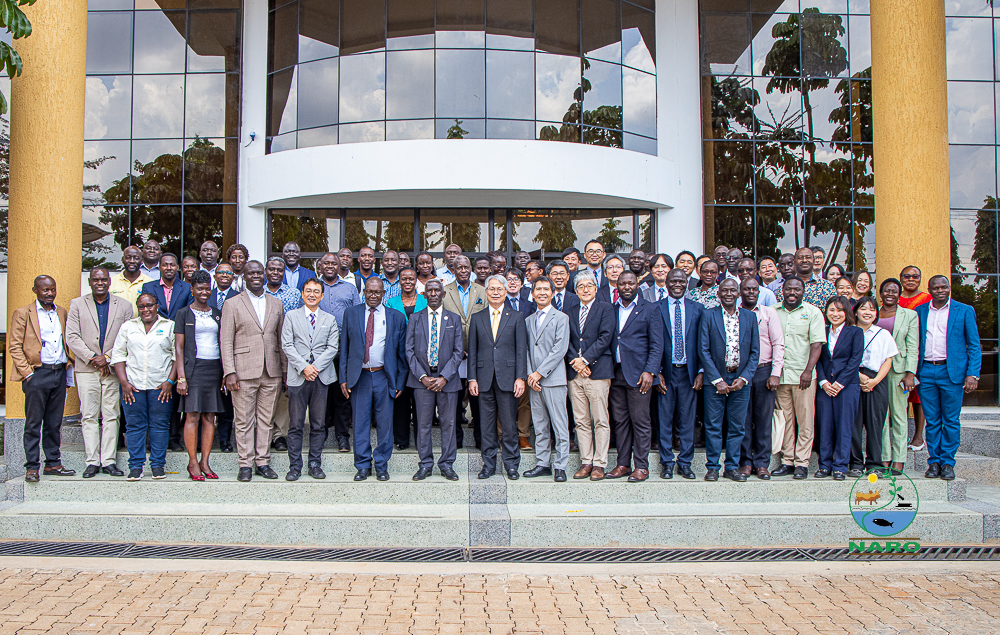
Highlighting the diplomatic and institutional importance of the partnership, the launch was also attended by key dignitaries including Mr. Norimasa Yoshida, Deputy Head of Mission at the Embassy of Japan in Uganda; Prof. Akio Ido, President of Kagoshima University; and the Chief Representative of JICA Uganda. Their presence underscores a shared international commitment to turning scientific research into practical solutions for food security and climate adaptation. Beyond farm-level economics, the initiative builds long-term regional expertise by funding PhD scholarships and technical training for young researchers, establishing Uganda as a regional hub for climate-smart rice innovation.