By using this site, you agree to the Privacy Policy and Terms of Use.
Accept
News
Wednesday, Jun 3, 2026
  • NARL
  • NaCORI
  • NaCRRI
  • NaSARRI
  • NaFIRRI
  • NaFORRI
  • NaLIRRI
  • HOME
  • INSTITUTES
    • SECRETARIAT
    • NaCCRI News
    • NaCORI News
    • NaFIRRI News
    • NaFORRI News
    • NaLIRRI News
    • NARL News
    • NaSARRI News
    • AbiZARDI News
    • BuZARDI News
    • BugiZARDI News
    • KaZARDI News
    • MbaZARDI News
    • MuZARDI News
    • NabuinZARDI News
    • NgettaZARDI News
    • RwebZARDI News
  • CASH CROPS
    • Cocoa
    • Coffee
    • Cotton
  • CEREALS
    • Millet
    • Sorghum
    • Maize
    • Rice
  • OTHERS
    • Beans
    • Banana
    • Groundnuts
    • Vegetables
    • Sunflower
    • Soya Beans
    • Simsim
    • Palm Oil
    • Forestry
  • LIVESTOCK
    • Dairy
    • Beef
    • Poultry
    • Aquaculture
    • Vaccinology
  • ROOT CROPS
    • Cassava
    • Irish Potatoe
    • Sweet Potatoe
  • TECHNOLOGIES
Reading: MUZARDI and University of Burundi Collaborate to Strengthen Coordination among Actors along Chicken Value Chain
Font ResizerAa
NewsNews
  • Home
  • Blog Index
  • Contact
Search
  • Pages
    • Home
    • Contact Us
    • Blog Index
    • 404 Page
    • Search Page
  • Categories

Trending →

Researchers embark on a journey to tap the Gold in Herbs and Spices

By Maria Nampeera June 3, 2026

Promoting Agroforestry Technologies for Climate-Resilience in Cattle Corridor Districts of the Lake Victoria Crescent Agro-Ecological Zone

By Maria Nampeera June 3, 2026

Utilizing Digital tools in dissemination of FAO climate change adaptation practices

By Maria Nampeera June 3, 2026

Bunyoro turns to bee forage restoration for enhancing climate change resilience and livelihood gains

By Abor Bob May 25, 2026

Research advances on the new Excelsa Coffee

By Frank Mugabi May 19, 2026
Follow US
© Foxiz News Network. Ruby Design Company. All Rights Reserved.
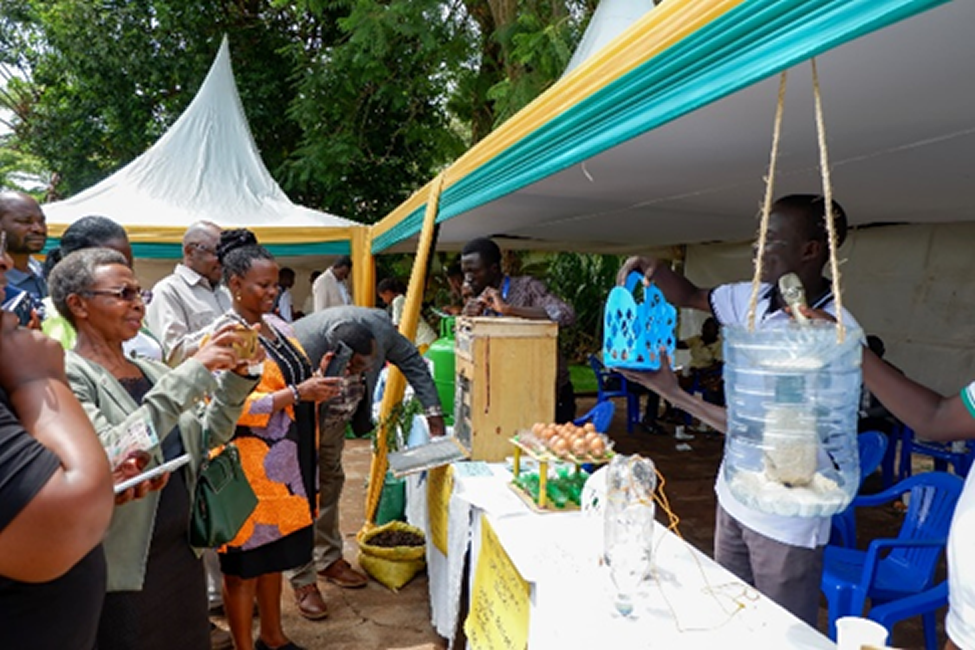
Paul Aliku a youth innovator displays a recycled plastic egg basket and feeder to guests
News > Blog > MuZARDI News > MUZARDI and University of Burundi Collaborate to Strengthen Coordination among Actors along Chicken Value Chain
MuZARDI News

MUZARDI and University of Burundi Collaborate to Strengthen Coordination among Actors along Chicken Value Chain

Dixson Muyomba
Last updated: June 3, 2026 12:01 pm
By Dixson Muyomba
Share
4 Min Read
SHARE

The chicken industry in East Africa has been growing steadily with production increasing by more than 3% annually. In Uganda, the average annual production growth rate is estimated at 1.2%.  The increase is due to its affordability and status as a healthier source of animal protein (white meat). Climate change is having both direct and indirect effects on the chicken enterprises.

In response to these challenges, the National Agricultural Research Organizations’ (NARO) Mukono Zonal Agricultural Research and Development Institute (MUZARDI), in collaboration with Gudie Leisure Farm, a private company, and the University of Burundi, are implementing the Greening the Chicken Value Chain project, funded by the Science for Africa (SFA) Foundation under the Grand Challenges for Africa.

One of the objectives of the project is to strengthen multi-stakeholder coordination platforms (MSCPs) along the chicken value chain in the Central region of Uganda and Burundi by bringing together climate change evidence producers, adopters and influencers. Target stakeholders were engaged at district, and national levels to discuss challenges, share knowledge, and prioritize climate-resilient solutions for different climate scenarios. In Uganda, district MSCPs were held in June and July 2024 in Lwengo, Masaka, Luwero and Kampala Metropolitan involving youth agribusiness owners, extension service, Environmentalists and community leaders.

On 14th November 2024, a National multi-stakeholder engagement was held at MUZARDI, Mukono district, bringing together youth poultry farmers, feed producers, transporters, marketers, processors, together with environmentalists, national extension service, policymakers and researchers to discuss strategies for improving the poultry value chain. A similar national multi-stakeholder meeting was held at University of Burundi in Bujumbura, on 10 December 2024.

During the meetings, the project’s Principal Investigator, Dr Barbara M. Zawedde, remarked that that while many youth in Uganda and Burundi have invested along the chicken value chain as a feasible source of income and employment, many are disappointed by the low output many times caused by the ever-changing climate. “The partnership between the University of Burundi, Gudie Leisure Farm, and Mukono ZARDI will support youth to identify and uptake climate resilient innovations.” said Dr Barbara

In Uganda, stakeholders discussed existing gaps in the poultry value chain, particularly concerning feed availability, biosecurity, and access to quality of breeds. Some of the climate-smart innovations showed included solar incubators, solar brooders, use of black soldier fly as alternative protein sources, recycling of plastics, alternative uses of chicken wastes,  digital tools for better coordination to mention a few. Dr. Jackson Mubiru, a representative of NAGRIC&DB emphasized the role of young entrepreneurs in shaping the future of poultry production in Uganda. Dr. Imelda Kashaija, while representing the Director General, NARO, commended MUZARDI for bringing youth innovators to exhibit, such as Paul Ariko a student of Kyambogo University, who is utilizing plastic waste to make equipment such as egg trays, low-cost drinkers, feeders etc.

In Burundi, the MSCP meeting focused on strengthening partnerships and mapping stakeholders across the poultry sector. The engagement revealed critical challenges, including high feed costs, inconsistent supply chains, and limited access to veterinary services. Stakeholders emphasized the need for improved coordination between private sector players and policymakers to create an enabling environment and regulatory framework for the poultry value chain in the country. Both meetings agreed to strengthen collaboration amongst value chain players by establishing multi-stakeholder coordination platforms to continue the dialogue, first by using social media platforms like WhatsApp to follow up on agreed actions. Participants agreed that the success of these MSCPs will depend on the willingness and commitment of different actors to work together.

Share This Article
Facebook Twitter Copy Link
Leave a comment

Leave a Reply Cancel reply

Your email address will not be published. Required fields are marked *

Recent Posts

  • Researchers embark on a journey to tap the Gold in Herbs and Spices
  • MUZARDI and University of Burundi Collaborate to Strengthen Coordination among Actors along Chicken Value Chain
  • Promoting Agroforestry Technologies for Climate-Resilience in Cattle Corridor Districts of the Lake Victoria Crescent Agro-Ecological Zone
  • Utilizing Digital tools in dissemination of FAO climate change adaptation practices
  • Bunyoro turns to bee forage restoration for enhancing climate change resilience and livelihood gains

Recent Comments

No comments to show.

You Might Also Like ↷

Researchers embark on a journey to tap the Gold in Herbs and Spices

June 3, 2026

Promoting Agroforestry Technologies for Climate-Resilience in Cattle Corridor Districts of the Lake Victoria Crescent Agro-Ecological Zone

June 3, 2026

Utilizing Digital tools in dissemination of FAO climate change adaptation practices

June 3, 2026

MuZARDI Newsletter 10th Edition

February 16, 2026
  • Advertise with us
  • Newsletters
  • Complaint
  • Deal
Stay tuned for a blend of captivating content that not only informs but also inspires you to navigate the ever-evolving landscape of technology, marketing, and market trends!
News
  • NaCCRI
  • NaCORRI
  • NaFIRRI
  • NaFORRI
  • NaLIRRI
  • NARL
  • NARO
  • NaSARRI
  • AbiZARDI
  • BugiZARDI
  • BuZARDI
  • KaZARDI
  • MbaZARDI
  • MuZARDI
  • NabuinZARDI
  • NgettaZARDI
  • RwebZARDI
5.2kFollowersLike
18.8kFollowersFollow
15.8kSubscribersSubscribe
Copyright © National Agricultural Research Organisation – NARO