
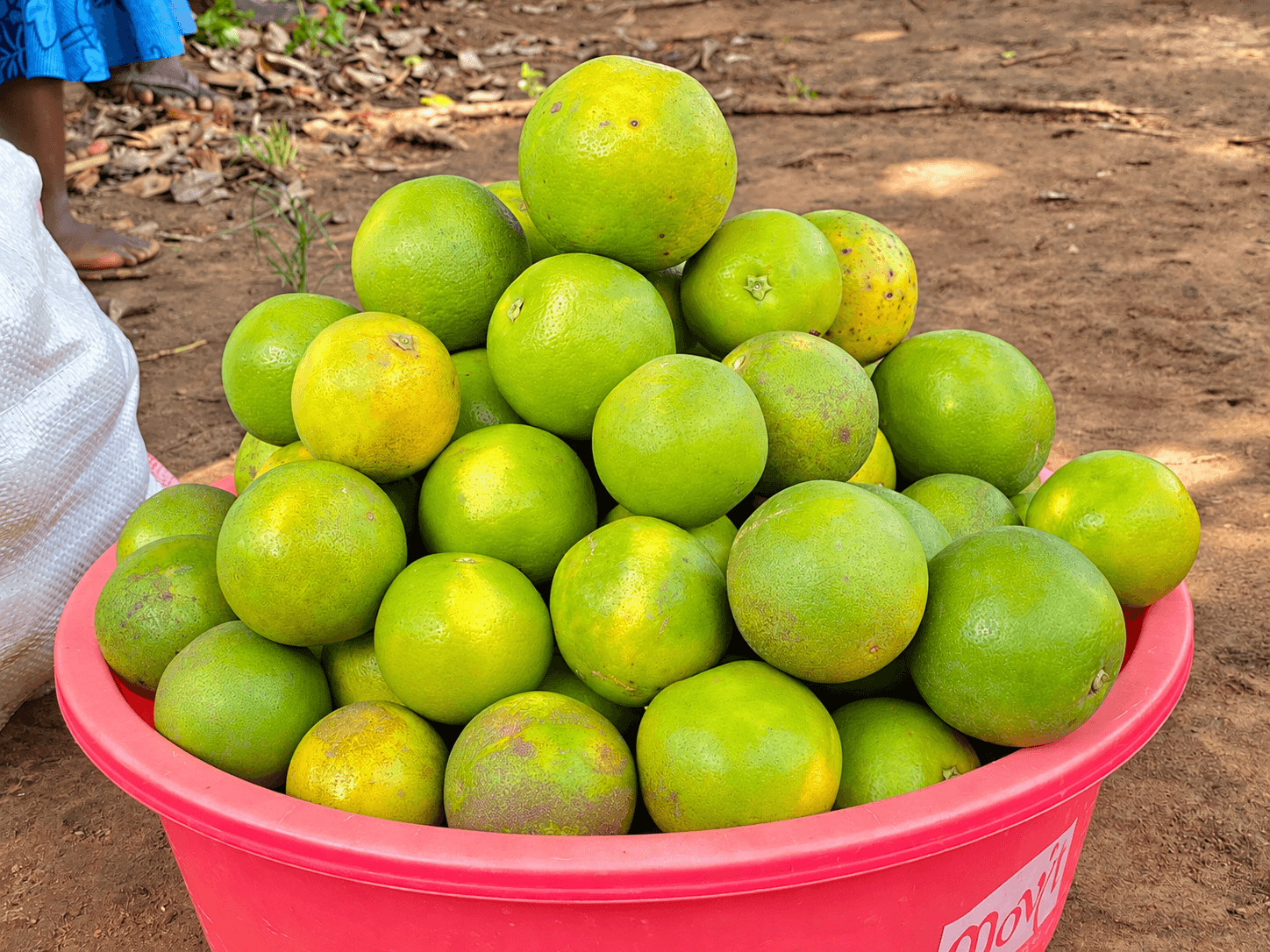

At the Teso Citrus October Festival it is great joy for farmers under KOPIA –NARO Citrus Model villages in Ngora, Kumi, Soroti and Kalaki districts. October seems to be juicer than other months of the year. This is the month of the Teso Citrus October Festival. And what a festivity it is. Farmers gather at the training center in Arapai –Soroti and reflect on the farming year through songs, dances, sports and poems. The peak of the celebrations is the announcement of the winner- the “King of the Citrus for the year”. KOPIA is the Korean Program on International Agriculture and NARO is National Agricultural Research Organization, an agency of the Ministry of Agriculture Animal Industry and Fisheries (MAAIF).
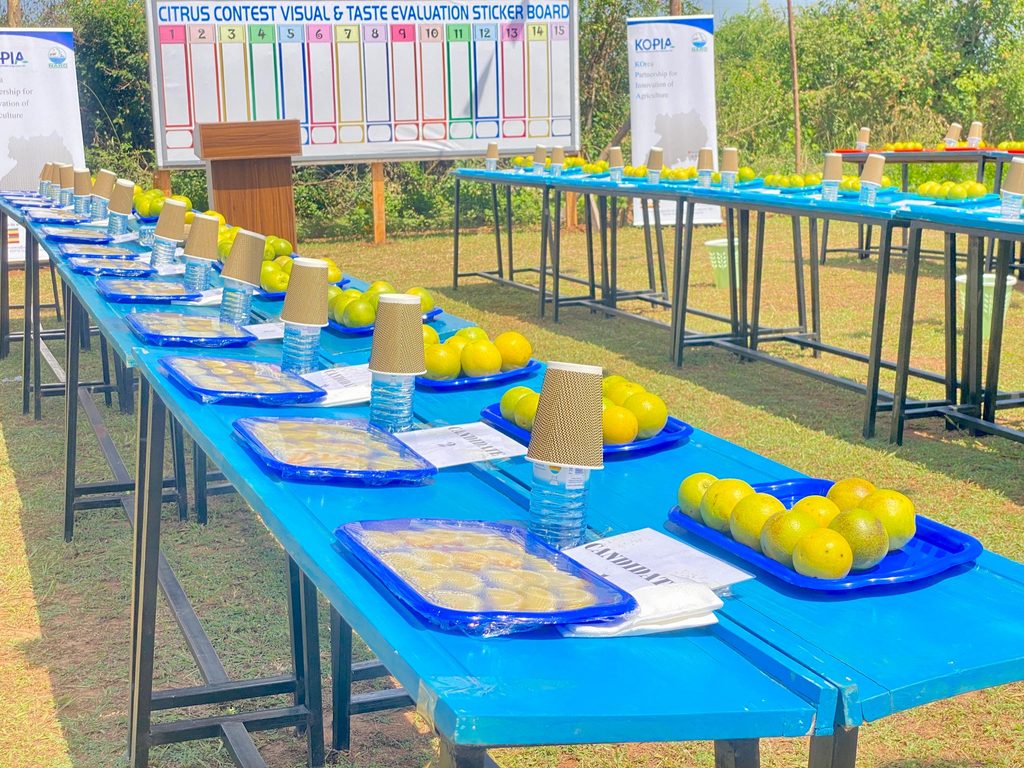
2026 marks the second festival. Director of KOPIA Uganda Dr. Cho Ilho said he is glad that the second festival shows better results than the first one. “Teso Citrus October festival this year has 15 orchards selected for the final competition and at the end of the day we will know the winner. Our farmers should produce high quality citrus fruits as a way of obtaining a good market and a good price. He noted that “We do not see these Teso citrus in super markets in Kampala we see citrus fruits from foreign countries”. He added that working in groups is key for farmers.
While emphasizing the value of quality, the current Principal Investigator of the Project, Dr. Onsmus Semalulu said there are quality tests from the orchids in the 4 districts that have been done earlier including brix tests in the laboratories to determine percentage of total soluble solids (dissolved sugar) along with acids, amino acids and other minerals in the juice of the citrus fruits). Also fruits size and pulp quality of the fruits.
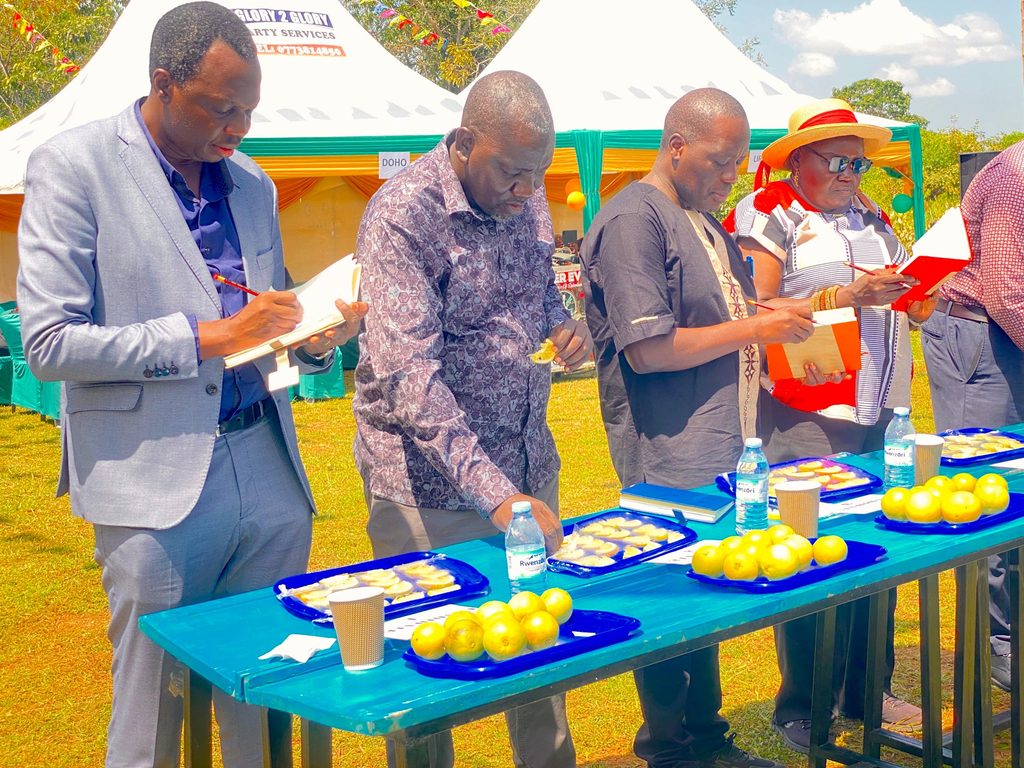
One core activity at the festival was the palatability testing which is part of the organoleptic testing for which 50 evaluators tested fruits from the 15 orchids that made it to the final round.
Organoleptic testing. Also known as sensory evaluation is a method of evaluating the quality, freshness, and characteristics of a product using the human senses of appearance / sight that appeal to colour, shape, size; taste/ flavour this assesses sweetness, tanginess saltiness, sourness, bitterness; smell/ aroma these detect freshness, fragrance, and bad odors (such as stale smells or spoilage smells); touch/ texture these check mouthfeel, firmness, thickness of juice and after – taste in mouth.
Key determinants of sweetness. Sugar-to-Acid Ratio: The balance between natural sugars and acids dictates the flavor. Natural Sugars: Sucrose, glucose, and fructose provide the sweet taste, typically existing in a general ratio of 2:1:1. Organic Acids: Citric acid is the main source of the sour, tangy flavor. More sugar relative to acid makes the fruit taste sweet.
Speaking on behalf of the Director General of NARO Dr. David Okello Kalule the Director of Research at the Semi-Arid Resources Research Institute NaSARRI -Serere stated that “NARO values collaboration with KOPIA in a lot of value chains such as citrus, rice, vegetables and many other crops and NARO takes this research in development partnership keenly. NARO takes it to the core and appreciates the collaboration between Uganda and Republic of South Korea”. He noted that amidst challenges like pests and diseases, water scarcity, Citrus variety diversity and soil infertility have formed a core research opportunity between Uganda and Korea.
“Citrus is a climate resilient crop and good commodity for food security and market. Stressing the relevance of citrus as a valued crop. Citrus value chain aligns with the Uganda vision 2024, vision 2060 and the Comprehensive Africa Agriculture Development Programme (CAADP) 2025 Kampala Declaration”.
He reiterated what the representative of the Director of Research National Agricultural Research Laboratories NARL-Kawanda Dr. Henry Wagaba mentioned in his speech that Citrus is a key crop of the National Development Programme 4 (NDP4) of Uganda because it contributes to the objective of agro-industrialization.
Dr. Henry Wagaba noted that “NARO contributes to the NDP4 objective of agro- industrialization. But before the industry gets products to add value on, there has to be good production of citrus“. He was glad that farmers have demonstrated that it is possible to have a vibrant citrus industry. “We now understand the value of pests and disease management in citrus, we have known that Citrus orchids need fertilizers, we now appreciate water management for good citrus growth. A new knowledge of pruning citrus trees is now common and we have been linked to markets of citrus fruits. These are very good practices that other farmers all over the world do in order to get good quality citrus fruits”, he said. NARL is the implementing Institute for NARO in this project through two core programs of Biodiversity and Biotechnology program and the Soils, Environment and Agro-metrology program.
Making Citrus a Flagship Commodity for Teso
On his part the in charge of Operation Wealth Creation in Soroti City Colonel David Ekabu was grateful to KOPIA and NARO for the technical and financial support t citrus farmers. He observed that Citrus is a game changer in the community which has boosted many farmer households with in the Model villages “You have given sustainable livelihoods which is hard to find these days . Citrus has also proved that the soils of Soroti are still good.” Speaking from the Christian perspective and quoting the Bible Psalms 125: 5-6 “Those that sow in tears will reap with joy”, he said that today we are reaping adding that “Today we must shine a bright light star for farmers . Growing fruits is not easy it requires patience, precision and discipline”. He commended farmers for strictly following the guidelines and that dedication has made the Teso citrus competitive in the market”.
In the same vein, The Soroti City Production Officer Mr. Okiria Joseph thanked the management of KOPIA and NARO “ Thank you for making this festival an annual event, we need to continue holding this annual event so rhat we are able to see progress of farmers.”. He cautioned farmers to make money from citrus and improve their livelihood for the better. He urged them to make Citrus a flag ship commodity that we can be proud of in Teso.”When you travel to other cities they have flag ship commodities, In Mbarara city they have the cow, we can also make Citrus our own flag ship”.
How far Citrus Model Villages has come
Dr. John Adriko, the Director of Research for the National Forestry Resources Research Center (NaFORRI) Kifu- Mukono and a once Principal Investigator of the project was glad that the project has stood the test of time for 12 years since KOPIA supported farmers in the 4 districts. “This year we are celebrating the second Teso October Citrus Festival and I congratulate all of you for reaching this level. NARO working with KOPIA and the citrus farmers in the 4 districts has offered many lessons”.
He thanked the South Korean Government and the Government of Uganda for the collaboration that has spun many years.
South Korea has significantly boosted Uganda’s agricultural sector by investing millions of dollars through agencies like the Korea International Cooperation Agency (KOICA) and the Korea Program on International Agriculture (KOPIA). In partnership with Uganda’s National Agricultural Research Organisation (NARO), South Korea has introduced advanced technologies, enhanced local seed supply chains, and established specialized training systems to help local smallholder farmers transition from subsistence to modern, commercial farming.
Mentioning that over the years, KOPIA Citrus Model Village Project: Launched in partnership with NARO in the Teso region the multi-year initiative established village training centers and supplied modern tools including autonomous sprayers and pest management support to scale up citrus and fruit production, though an exact cumulative count of trained individual farmers in those specific model villages.
Learnings from KOPIA-NARO Project rolls on to the Uganda Climate Smart Agricultural Transformation Project
Dr. Adriko one time Principal Investigator of this research project was grateful to the NARO team, farmers as well as the management of KOPIA who have changed staff at the managerial level overseeing the project. He regretted that they lost people at all levels but farming has continued with the good work making great progress. Reminiscing the start of the project he notes that “There is great progress in the quality of the citrus fruits and yield. “You have been supported through the 12 years but now the project support is low. Framers should take it up now. We thank KOPIA and RDA for the support to the NARO team and the farmers especially for the cross learnings between Uganda and Korea”. ”I want to thank the recognition of this project by NARO. Because of the success of this project through government of Uganda and the World bank through the Ministry of Agriculture Animal Industry and Fisheries, a new project the Uganda Climate Smart Agricultural Transformation Project has given an opportunity to NARO to carry on the gains and lessons of the KOPIA-NARO Citrus Project to be implemented in Teso and Lango regions”.
The 6-year World Bank funded projects is implemented in across 69 districts of Uganda, (7 Refugee Hosting Districts). The new project is Enhancing Resilience Through Sustainable Citrus Value addition chain development in Uganda. It will be operating in Serere, Kumi, Ngora and Katakwi districts of Teso and Alebtoing, Oyam, Apac districts in Lango region respectively. 4 NARO Institutes including National Forestry Resources Research Institute(NaFORRI), National Agricultural Research Laboratories (NARL), National Crops Resources Research Institute (NaCRRI) and Ngetta ZARDI; Kabale University and Awoja Riverside Farm are the implementers of the new citrus project.