
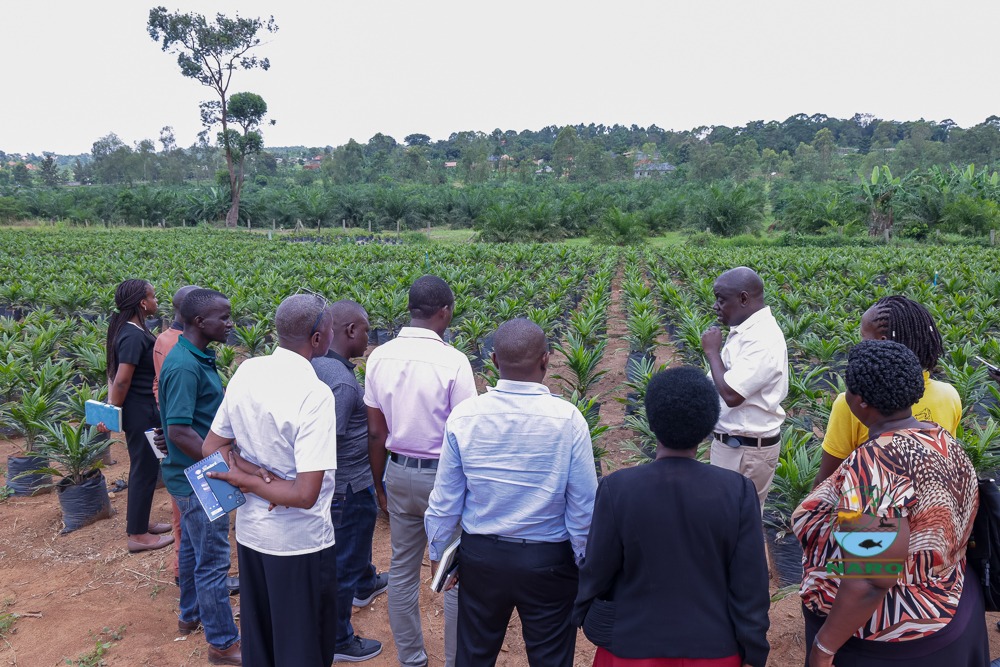

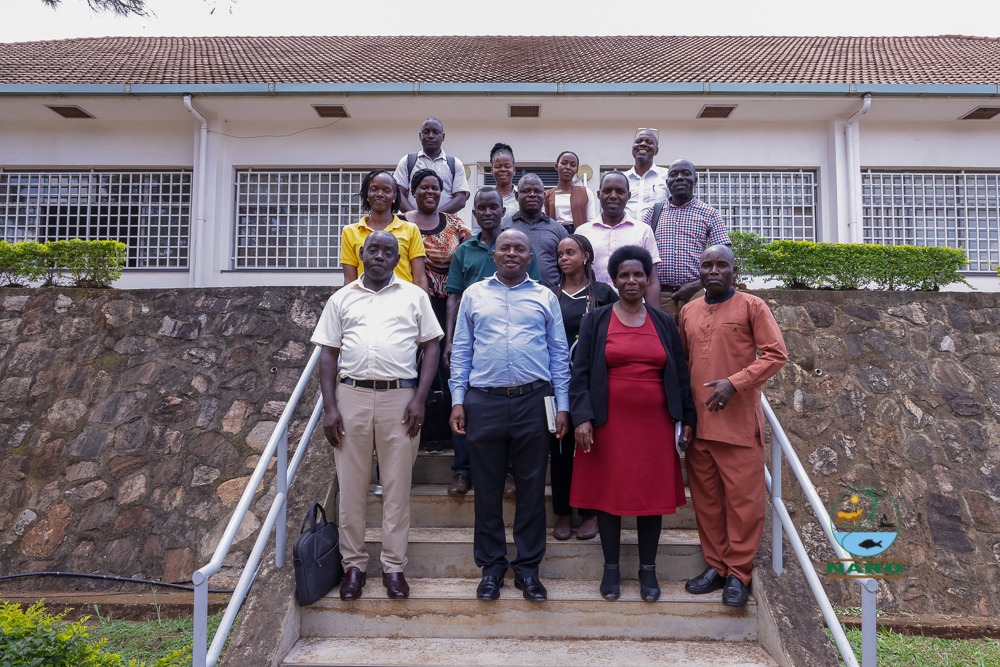
The National Crops Resources Research Institute (NaCRRI), convened a strategic technical briefing with key officials from the Ministry of Agriculture, Animal Industry and Fisheries (MAAIF) and the Department of Crop Inspection and Certification (DCIC).
The high-level engagement focused on aligning national oil palm seed system initiatives, advancing localized breeding programs, and enforcing strict regulatory and nursery quality standards to accelerate the sustainable growth of Uganda’s oil palm sub-sector.
Led by Dr. Gabriel Ddamulira, Programme Leader for Oil Palm Research at NaCRRI, the briefing detailed NARO’s multi-pronged approach to building a self-sustaining national seed system. Central to this strategy is NaCRRI’s dedicated oil palm breeding and germplasm evaluation program, which focuses on developing high-yielding varieties tailored specifically to Uganda’s unique agro-ecological conditions.
By optimizing crossing potential, tracking flowering periodicity, and evaluating fruit maturity post-pollination, research efforts aim to increase the domestic availability of certified planting materials while drastically reducing the country’s reliance on imported pre-germinated seeds.
“Establishing a robust, localized oil palm seed system is critical for securing farmer livelihoods and expanding domestic production,” stated Dr. Gabriel Ddamulira. “Through scientific research and strict regulatory collaboration with MAAIF and DCIC, we are ensuring that Ugandan farmers receive high-quality, high-yielding planting materials.”
To safeguard biosecurity and preserve genetic integrity, NaCRRI highlighted the mandatory regulatory pathways governing seed importation. The institute outlined comprehensive procedures for sourcing certified Tenera hybrids, including disease-resistance verification, official regulatory permits, quarantine compliance, and specialized handling techniques for germinated seeds to minimize mortality rates.
NaCRRI presented standardized, multi-stage nursery management protocols designed to support optimal seedling development:
Pre-Nursery Establishment: Precise planting techniques, controlled irrigation, tailored early nutrition, and proactive integrated pest and disease management.
Main Nursery Transition: Strategic transfer of seedlings into larger polybags, combined with proper field spacing, balanced fertilizer application, and routine monitoring to ensure healthy canopy and root growth.
To ensure that only elite planting materials reach farmers, NaCRRI demonstrated a mandatory Three-Tier Seedling Inspection and Culling System. This rigorous quality control framework systematically identifies and purges weak, stunted, deformed, or diseased seedlings at different growth stages prior to field distribution. The technical session underscored NaCRRI’s commitment to bridging scientific research with regulatory oversight. By establishing clear production standards and deepening collaboration with MAAIF and DCIC, NARO is laying a resilient foundation for expanded commercial oil palm farming across Uganda.