
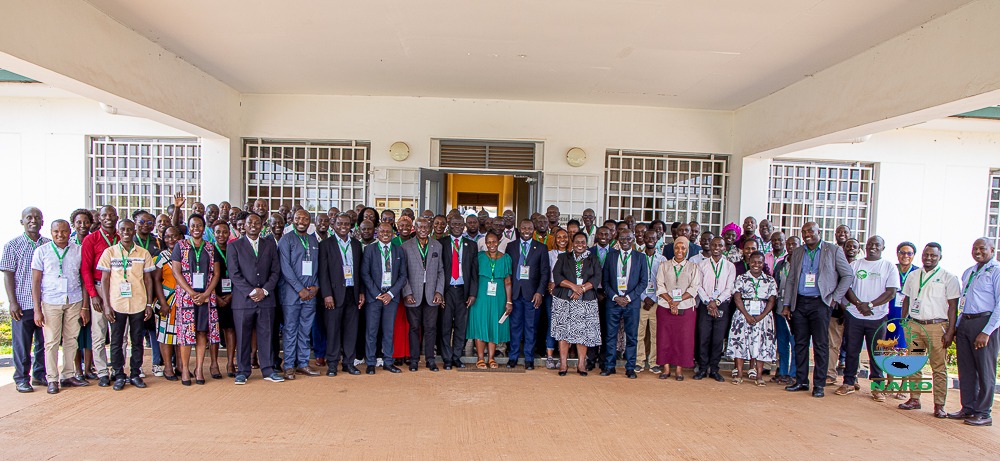

A Pivotal Moment in Namulonge
From October 21 to 23, 2026, the National Agricultural Resources Research Institute (NaCRRI) in Namulonge, Wakiso District, became the epicenter of Uganda’s agricultural transformation. Under the banner of the continental Technologies for African Agricultural Transformation (TAAT-II) initiative funded by the African Development Bank (AfDB) and driven jointly by the National Agricultural Research Organization (NARO) and the Africa Rice Center (AfricaRice), a high-level National Business-to-Business (B2B) Dialogue and Technology Fair convened key players from across the rice value chain.
The three-day gathering was designed as a catalytic forum to transition the national rice sector from traditional practice into a market driven, climate-resilient enterprise capable of achieving national self-sufficiency and curbing reliance on costly imports.
The high-level gathering directly aligns with Uganda’s National Rice Development Strategy II (NRDS II) and the National Development Plan (NDP), reinforcing the agricultural sector’s transition toward commercialization and climate resilience.
Explaining the strategic mandate behind the initiative, Dr. Arthur Wasukira, Coordinator of the TAAT-II Rice Compact in Uganda, underscored the core objective of bringing key actors together:
“The main objective of these B2B dialogues is to identify critical gaps along the rice value chain and rally stakeholders to meet national rice demand. By doing so, we aim to fully functionalize the domestic rice processing industry and significantly reduce foreign rice imports.”
Addressing delegates during the dialogue, Dr. Titus Alicai, Director of Research at NaCRRI, emphasized that research institutions must work hand-in-hand with private enterprises to solve market challenges and scale proven technologies.
Highlighting breakthrough research engineered to meet evolving consumer preferences and combat climate stress, Dr. Alicai informed participants of NARO’s latest breeding innovations. He revealed that NARO is finalizing the release of a high-value, locally adapted Basmati rice variety designed to directly substitute expensive premium imports. Furthermore, to address climate vulnerabilities associated with traditional 6-month varieties, researchers have developed high-yielding, 4-month aromatic varieties such as NARORICE 1 and UKAFACI 39. These shorter-maturing crops offer farmers faster seasonal turnover, improved market competitiveness, and enhanced resilience against unpredictable weather patterns.
“NARO NaCRRI is in the business of technology and innovation,” stated Dr. Alicai. “You enter a partnership when you have value to offer, and every participant here was selected for the distinct value they bring to the chain. The ultimate success of this initiative will be measured by tangible increases in domestic volumes and reduced imports within the coming months.”
Opening the dialogue on behalf of the Ministry of Agriculture, Animal Industry and Fisheries (MAAIF), Mr. Peter Dhamunzugu, representing the Permanent Secretary, reaffirmed the government’s mandate to foster an enabling environment for private sector growth. MAAIF reiterated its commitment to prioritizing four strategic pillars:
- Strengthening Seed Systems: Improving seed multiplication, certification, and farmer accessibility.
- Post-Harvest Operations: Raising rice processing, cleaning, and grading standards to premium market levels.
- Market Integration: Connecting commercial farmers directly to millers, off-takers, and regional markets.
- Resource Mobilization & Accountability: Deepening public-private partnerships through annual multi-stakeholder reviews.
Closing the proceedings, Dr. Dennis Kyetere, Chairperson of the NaCRRI Advisory Committee and former NARO Director General, noted that the B2B framework provided a vital, structured space for agribusinesses to interact, negotiate, and forge long-term deals.
“Alone you cannot go far, but together you will reach far,” Dr. Kyetere said. “This B2B dialogue has demonstrated that we are on the right path to drastically reducing foreign rice imports by leveraging our collective commercial strengths.”
Dr. Edgar Twine, Country Representative AfricaRice, urged private sector participants to leverage the momentum generated at the fair to present bankable business models to funding partners like the AfDB.
To provide participants with practical, hands-on experience in modern rice production and high-standard processing, the dialogue featured extensive field visits across key hubs in Luweero District:
- ZAABTA Association (Wobulenzi): Demonstrating the power of farmer aggregation, ZAABTA connects 6,000 farmers across 400 organized groups, supported by 6 extension workers, 75 village agents, and 6 storage units. The association processes 30,000 to 40,000 metric tons of paddy per season, providing bundled services including mechanization, seed loans, transport, specialized milling, and free extension training (with a 20% operational discount for registered members).
- Golden Crop Improvement Farm (Kikyusa): Delegates toured large-scale field operations to witness best practices in climate-smart seed multiplication and modern rice production.
- Golden Fasteners Limited (Kasana): Participants inspected state-of-the-art rice processing machinery engineered to clean, grade, and mill rice to exact commercial market standards, proving local capability to compete with imports.
The Namulonge dialogue demonstrated that achieving rice self-sufficiency requires far more than on-farm production, it demands an integrated ecosystem where every commercial function aligns. Throughout the three days, multi-stakeholder sessions tackled critical pillars of value chain development, including agribusiness financing, agricultural insurance, commercial seed systems, post-harvest logistics, and market scaling.
By creating a structured platform for direct engagement, the initiative provided a unique opportunity for farmers, millers, financial institutions, insurers, input suppliers, and researchers to interact face-to-face. Delegates leveraged their respective operational strengths and competitive advantages to negotiate deals, manage risk, and strategically position their enterprises for commercial growth. This practical B2B framework is vital for the sustainable transformation of Uganda’s rice sector for several key reasons:
- Closing the Yield & Self-Sufficiency Gap: Direct linkages ensure that high-yielding, climate-smart crop varieties transition rapidly from research laboratories into commercial fields.
- Improving Quality & Market Competitiveness: Direct partnerships with millers drive investment in modern cleaning and sorting technology, ensuring Ugandan-grown rice matches international quality standards and displaces expensive imports.
- De-Risking Agribusiness Investment: Bringing insurers and financiers into direct dialogue with structured farmer groups and off-takers builds transparency, de-risks loans, and unlocks agricultural credit.
- A Scalable Blueprint for National Agriculture: The market-led B2B model provides a proven, repeatable framework that NARO plans to scale across other strategic commodity value chains, including maize and legumes.