
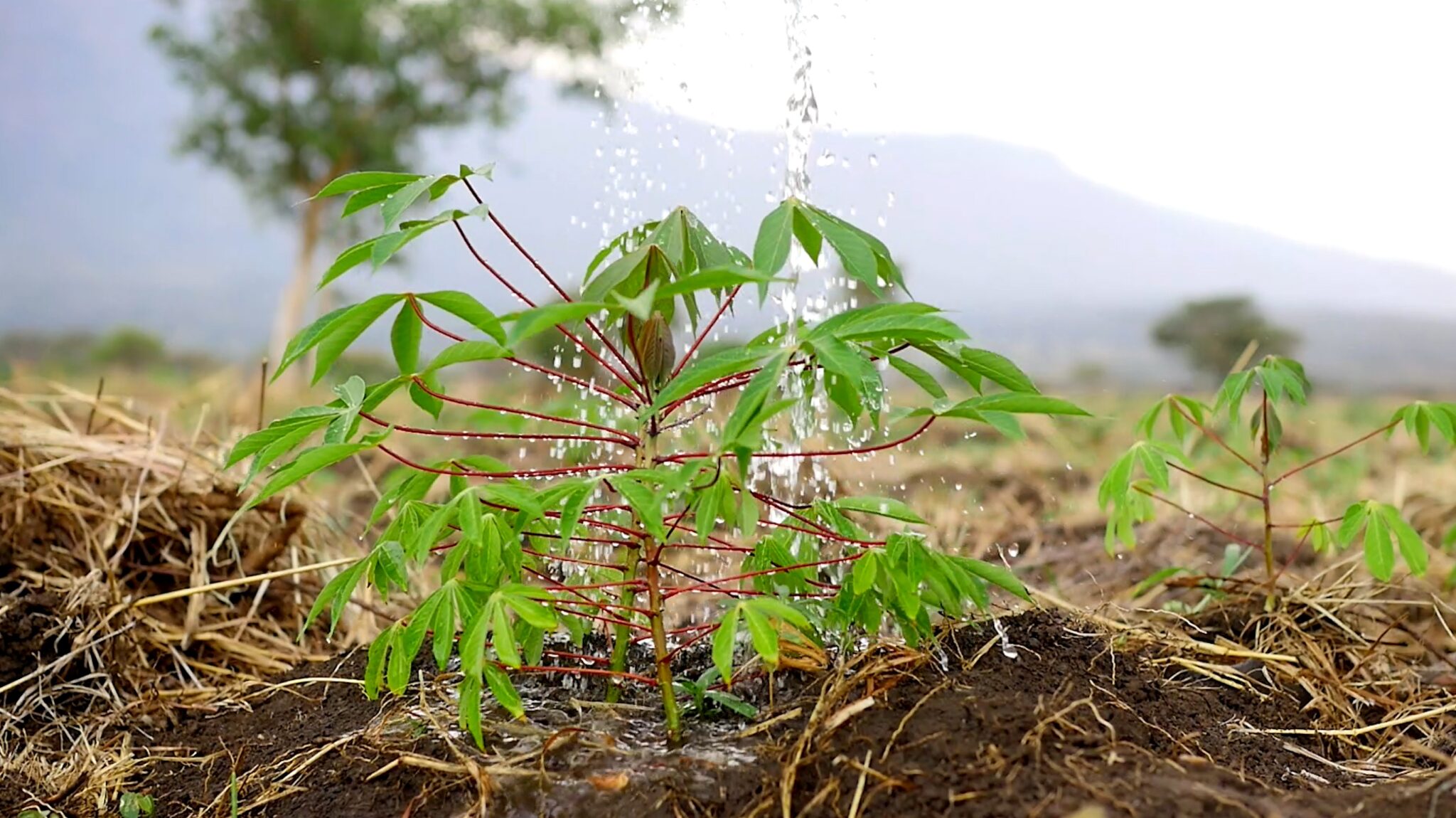

As drought and climate variability continue to threaten food security in Karamoja, the National Agricultural Research Organisation (NARO), through the Uganda Climate-Smart Agricultural Transformation Project (UCSATP), is promoting drought-resilient and early-maturing crops to help communities withstand prolonged dry spells.
Among the crops being promoted is cassava, which researchers say has the potential to provide a reliable source of food in Karamoja because of its resilience and ability to remain in the soil for extended periods.
At Nabuin Zonal Agricultural Research and Development Institute (ZARDI), NARO has established a 200-acre cassava multiplication and demonstration facility under UCSATP to increase farmers’ access to quality planting materials while demonstrating improved cassava production technologies.
Dr Walter Odongo, Director of Research at Nabuin ZARDI, said the intervention is aimed at increasing cassava production and productivity while improving the livelihoods of farmers in the region.
“The intention here is about two-fold: one, to increase access to quality planting material, but also to demonstrate cassava production technology to the farmers,” Odongo said.
He said cassava is particularly relevant to Karamoja because of the region’s exposure to climate change and climate variability.
“Cassava has proven to be a very resilient crop for the farmers. So, once this technology is adopted, the cassava varieties we are promoting, for instance NAROCAS 1, are very well adapted to the region,” he said.
The multiplication facility is expected to supply planting materials to thousands of farmers across the region.
Dr Damalie Akwango, Coordinator of UCSATP at NARO, said Nabuin ZARDI is working with about 200 farmer groups through the cassava demonstration initiative.
She said the 200-acre block is expected to provide planting materials for about 6,000 farmers.
“This is a good move towards the achievement of what is planned in the project,” Akwango said.
The intervention forms part of UCSATP’s broader effort to increase access to improved agricultural planting and breeding materials among organised farmer groups.
NARO is currently promoting three cassava varieties at the demonstration site — NASE 14, NASE 19 and NAROCAS 1.
Dr Ijara Anthony Raphael, a Senior Research Officer at NARO, said the varieties were selected for their desirable characteristics, including adaptability, high yields and relatively early maturity.
“NASE 14 is easily adaptable to the soil and it is high yielding and quick maturing. NASE 19 equally has high-yielding traits,” Ijara said.
He said NAROCAS 1, which has performed well in different parts of Uganda, is also being promoted because of its high yield potential.
The researchers believe the crop could help change the perception of cassava among communities in Karamoja, where it is often regarded as a crop that grows largely on its own.
“In Karamoja, cassava is perceived as a wild crop that grows on its own, so we are trying to stimulate uptake of cassava,” Ijara said.
The demonstration site therefore serves not only as a source of planting material, but also as a practical learning centre where farmers can observe recommended cassava production practices.
Dr. Ijara noted that one of cassava’s biggest advantages in Karamoja is its flexibility as a food crop.
Unlike crops that are harvested within a short period after maturity, cassava can remain in the soil for extended periods and be harvested when food is needed.
“Cassava can ensure food availability throughout the year because it can be harvested piecemeal and is always available when needed, as opposed to other crops which you harvest once and consume,” Ijara said.
He added that cassava can remain in the soil for more than two years, providing households with an important food reserve during periods of food shortages.
For a region regularly exposed to prolonged dry spells, researchers say this characteristic could provide an additional buffer against hunger.
The 200-acre site is consequently being developed as a strategic “nuclear farm” from which cassava planting materials and production skills can be extended to communities across Karamoja.
The cassava initiative is also creating employment opportunities for local communities.
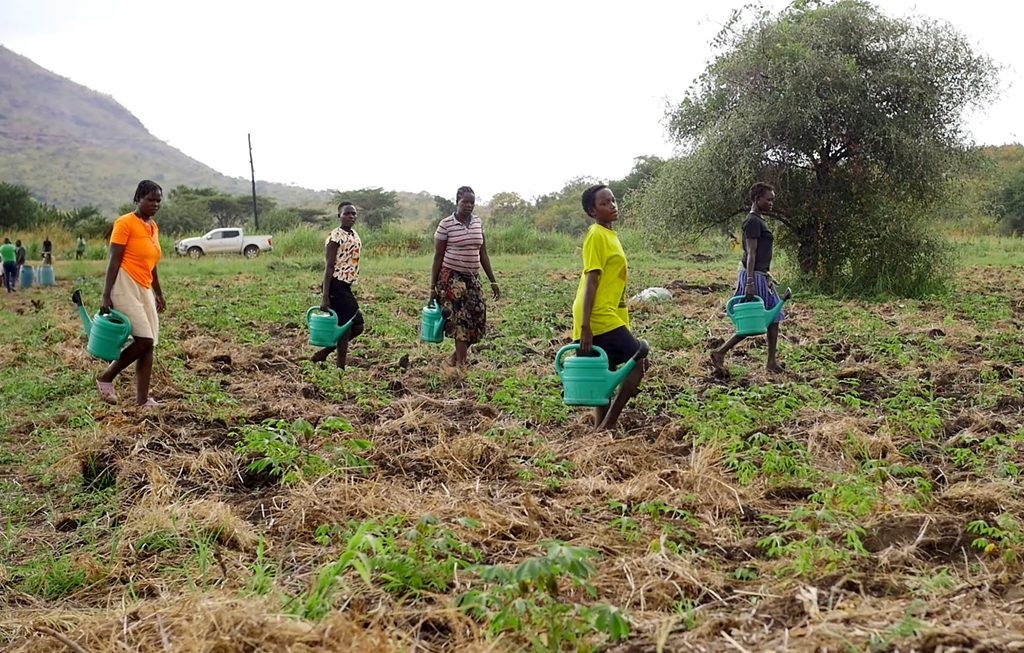
According to Ijara, about 50 workers on average are engaged daily in activities at the demonstration site, including planting, weeding and watering.
The workers, many of whom are youth and women, earn about Shs7,000 per day.
“Like now it is dry, you can see they are providing water physically and they earn a living from doing that,” he said.
The site is also being used as a training facility for students pursuing certificate, diploma, degree and postgraduate programmes, providing them with practical skills in cassava production.
“This as a nuclear farm for cassava will enable us to achieve and extend cassava farming skills to these young ones,” Ijara said.
For farmers participating in the programme, the technology offers both a food source and an income-generating opportunity.
Lugel Patrick, a host farmer in Napak District, said farmers who have received training from NARO are increasingly appreciating the improved cassava varieties.
“These cassava varieties are very good. Farmers are very happy about them,” he said.
Lugel said farmers have been trained in how to plant and manage cassava and called on more farmers across Karamoja to take up the crop as part of efforts to fight hunger.
“My call to the farmers in Karamoja is that they should continue planting cassava to fight hunger. We want cassava as a staple food,” he said.
He said cassava can also complement other locally produced foods.
“After harvest, we dry it and later take it for grinding. We then mix it with sorghum that is already very good meal,” he said.
Beyond household consumption, farmers can sell part of their cassava harvest to generate income.
“The money got from selling the cassava can be used for taking children to school and you can also use it for buying animals that you rear at home,” Lugel said.
With drought increasingly affecting agricultural production in Karamoja, NARO and its partners are banking on crops such as cassava, alongside other climate-resilient varieties, to strengthen household food security, increase farmers’ incomes and build resilience to climate shocks.
The cassava multiplication and demonstration initiative is therefore intended to move cassava from being regarded largely as a “wild crop” to a deliberately cultivated, productive and commercially useful crop for the people of Karamoja.
Media Contacts
Frank Mugabi
Senior Communications Officer
Plot 11-13 Lugard Avenue, | P.O Box 295, Entebbe | 0414 320341/0772 576473|
Website: www.naro.go.ug | X: @ narouganda