

In a country where over 70 percent of the population relies on the land for daily survival, agriculture is far more than an economic sector in Uganda, it is the pulse of national food security, public health, and social stability. Yet, this vital pillar faces an escalating series of systemic shocks. Unpredictable weather patterns, prolonged droughts, sudden flash floods, and destructive crop pest surges constantly threaten smallholder farmers. Operating predominantly on rain-fed systems with minimal financial safety nets, farming households remain continuously vulnerable to climate volatility. To shield rural livelihoods and secure the country’s economic future, de-risking agriculture has emerged as an urgent national imperative.
De-risking agriculture means systematically identifying, mitigating, and transferring the multi-layered risks that prevent the sector from thriving. For the individual farmer, risk manifests as low yields, devastating pest infestations, and extreme crop failure. For financial institutions, input suppliers, and off-takers, the inherent unpredictability of farming makes agricultural investments appear unviable. Without targeted interventions to absorb or offset these uncertainties, farmers are trapped in subsistence cycles, unable to afford improved seeds, fertilizers, or modern technologies that could elevate productivity beyond basic survival.
This is precisely where policy becomes the indispensable bridge between scientific innovation and real-world resilience. While research institutes generate breakthrough solutions, such as drought-tolerant crop varieties, biological pest controls, and digital extension systems, these tools cannot achieve widespread impact without clear policy frameworks. Robust policy serves as the operational engine that aligns government priorities, regulates input markets, and establishes national infrastructure. From enforcing strict standards against counterfeit inputs to backing agricultural insurance and building strategic seed reserves, intentional policy creates an enabling environment where public and private actors can invest with confidence.
For Uganda, enacting proactive innovation policy is no longer optional; it is the cornerstone of sustainable development. As land pressures rise due to rapid population growth and urbanization, agricultural policies must harmonize land use, climate adaptation, and trade frameworks. By embedding predictive data modeling into policy design and strengthening extension networks, Uganda can transition from reactive crisis management to proactive risk mitigation. De-risking agriculture through clear policy transforms the sector from a high-hazard gamble into a stable, climate-resilient enterprise capable of feeding the nation and powering economic transformation.
Stakeholder Dialogue at Skyz Hotel
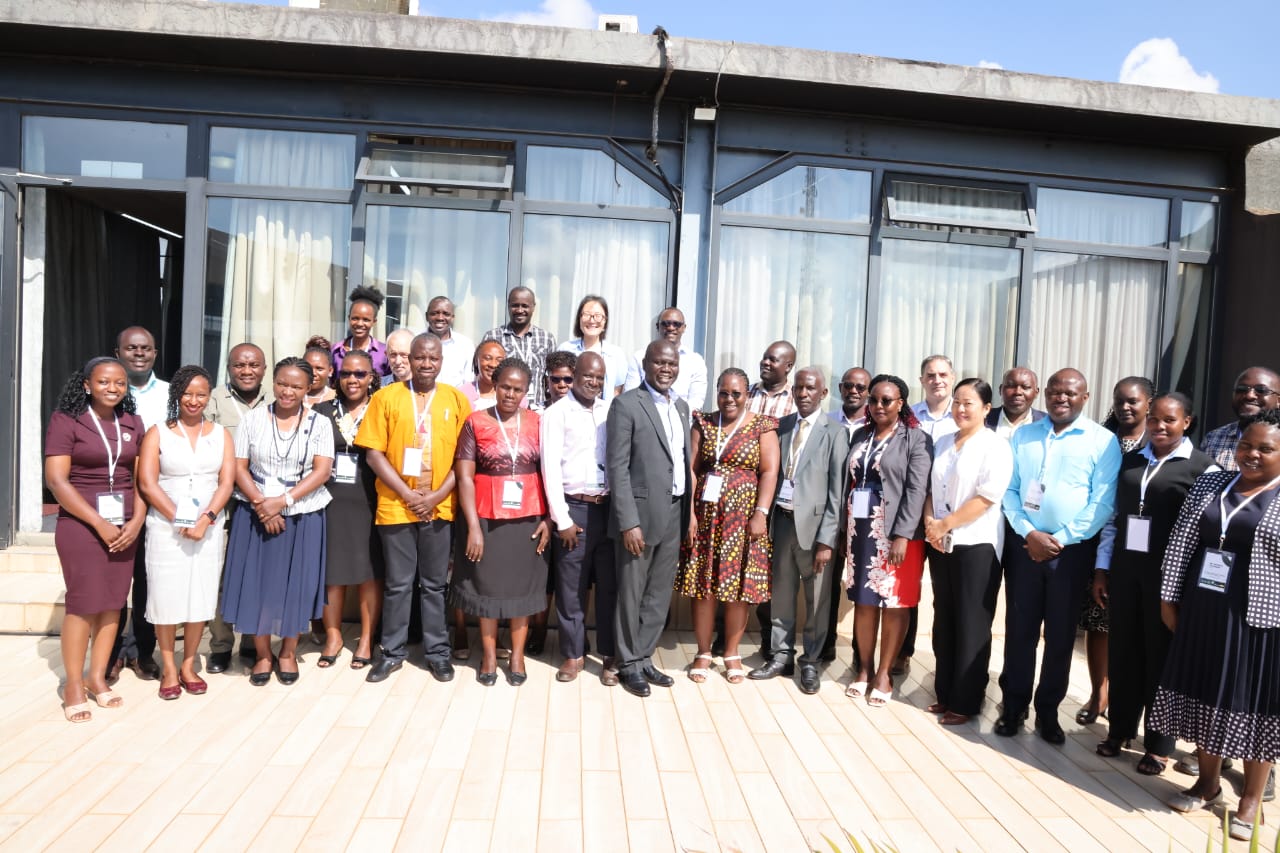
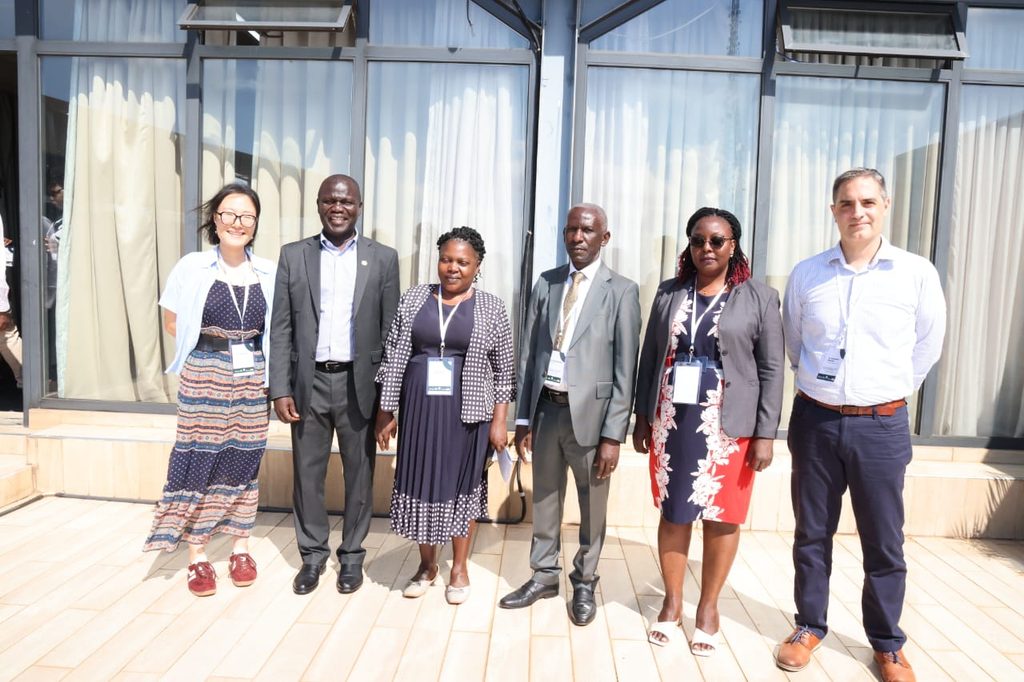
At the Skyz Hotel in Kampala on September 16, 2026, agricultural leaders, researchers, and policymakers convened for a high-level dialogue convened by the Alliance for Bioversity and CIAT focused on this urgent mission: De-risking Uganda’s agriculture sector against climate and market shocks with the main objective of the meeting being “To understand emerging risks affecting Uganda’s agriculture sector, identify policy needs for de-risking agriculture, and strengthen linkages between policy priorities, research, and investment on innovations”.
Opening the proceedings, Dr. Titus Alicai, Director of NaCRRI, underscored the immediate realities facing rural communities, late rainfall, localized climate shocks, and rapid outbreaks of crop pests disrupting planting cycles nationwide. His remarks framed the dialogue as a critical step toward building resilience for smallholder farmers.
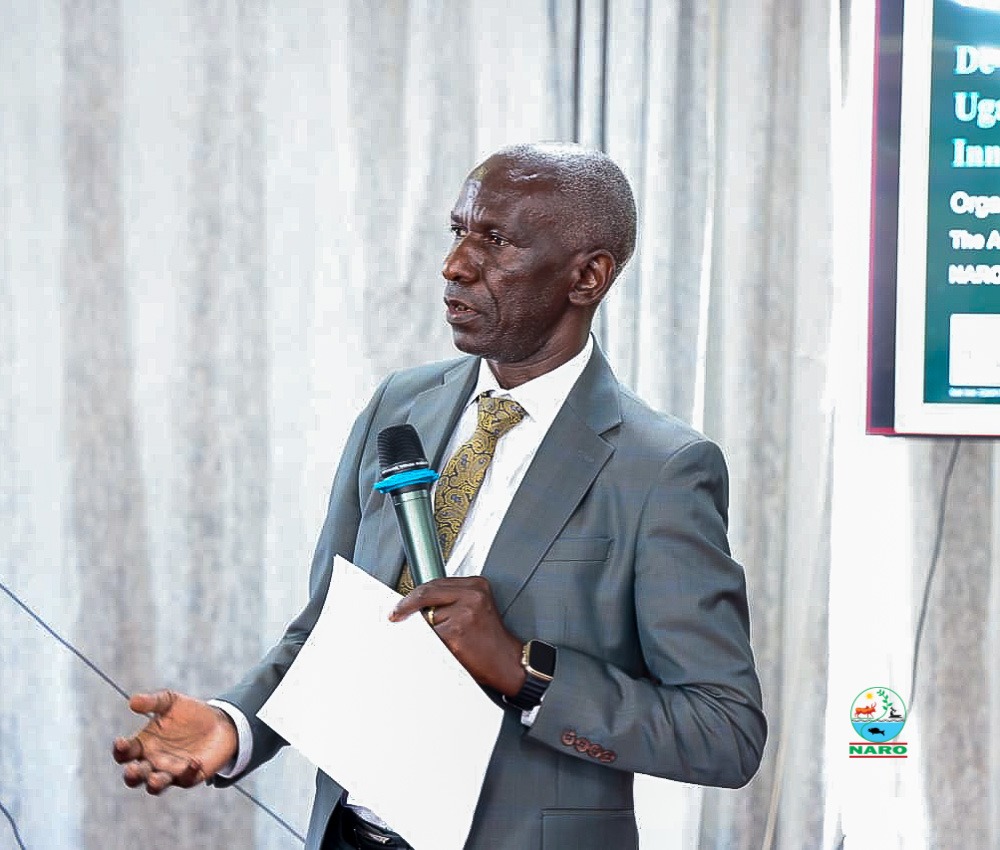
Delivering the keynote address, Dr. Yona Baguma, Director General of NARO, emphasized that de-risking strategies must be embedded into national innovation policy. He reminded participants that floods and landslides are not random events, but the result of mismatched planning between land use, infrastructure, and agriculture. Aligning these systems, he argued, is essential for long-term resilience.
Dr. Baguma outlined several priority interventions to safeguard Uganda’s agricultural future:
Predictive Mathematical Modeling: Integrating forecasting tools into plant protection frameworks to anticipate pest and disease outbreaks before they devastate yields.
Seed System Integrity & Strategic Reserves: Establishing a formal national seed reserve and tightening regulation of informal seed markets to address looming seed shortages.
National Agricultural Data Hub: Creating a centralized platform for evidence-based policy and precise risk forecasting.
Closing the Productivity Gap: Strengthening extension services and linking researchers, academia, and local governments to unlock Uganda’s untapped technological potential.
Food & Feed Safety Governance: Enforcing strict regulatory frameworks to combat contamination in staple crops such as bananas, beans, and cassava.
Susan Ajambo, the Alliance Country Representative and Chief Convener of the meeting, reaffirmed the collective resolve of CIAT, MAAIF, and NARO to translate research insights into actionable policy advisories for cabinet-level leadership. She stressed that innovation policy must serve as an active shield for smallholder farmers, enabling them to thrive despite climate volatility. “We must transition from reactive risk management to proactive, resilient policy frameworks,” Ajambo emphasized, calling for unified action across the agricultural sector.
District representatives shared region-specific challenges, while researchers presented innovations ranging from drought-tolerant varieties to remote sensing and foresight modeling. These discussions highlighted the importance of bridging local realities with national policy frameworks.
In her closing remarks, the Commissioner for Seed Certification and Protection acknowledged the uncertainties facing agriculture and the heavy demands placed on extension staff. She called for clearer, more accessible publications to support frontline workers and praised the Alliance of Bioversity International & CIAT for championing the dialogue.
The meeting underscored that de-risking agriculture is not just about managing crises, it is about proactively shaping Uganda’s future. By embedding science into policy and strengthening collaboration across institutions, Uganda can transform agriculture from a high-hazard gamble into a climate-resilient engine of national development. Rising temperatures, unpredictable rainfall, and climate shocks directly threaten Ugandan agriculture, illustrating why robust policy interventions and climate-smart solutions are urgently needed across the sector.