

For decades, beekeeping has supported rural livelihoods across Uganda’s Bunyoro region. Today, the vital source of income is under increasing pressure due to growing climatic shocks. Additionally, expanding agriculture, deforestation, bush burning, and the widespread use of fossil fuel-dependent chemical fertilizers and agrochemicals have degraded bee habitats and reduced foraging resources, threatening honey production and farmer incomes.
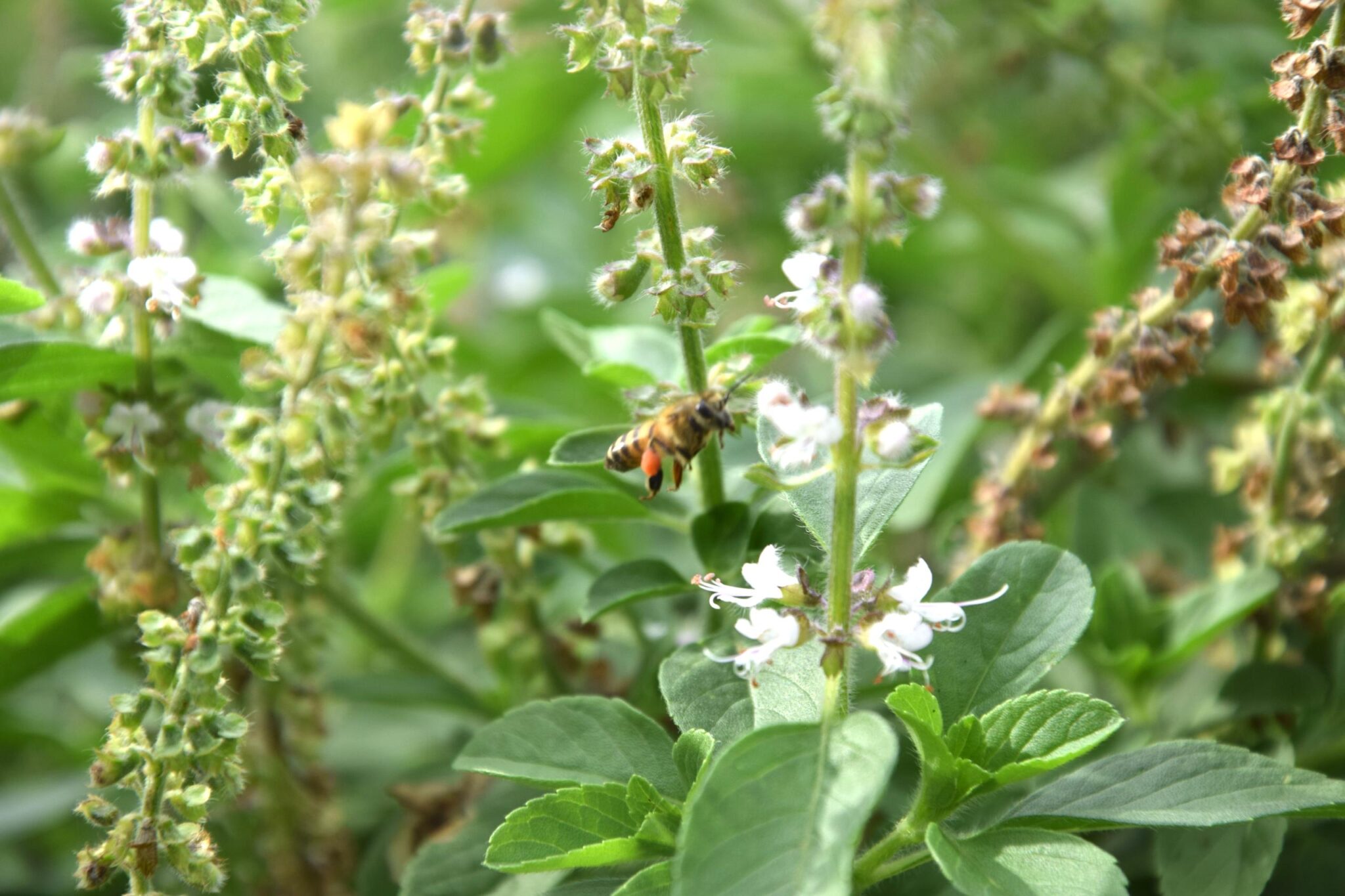
Bulindi ZARDI is championing efforts to restore degraded habitats with bee foraging resources as a pathway to improved honey production and climate resilience. Research undertaken in 2017 resulted in identification of Calliandra Calothyrus and Ocimum gratissimum (African basil) as highly adaptable and suitable key bee foraging species for rehabilitating degraded ecosystems. Pilot results further revealed that foraging on the two-plant species resulted in improvement of honey yield and quality, underscoring their potential use in a large-scale restoration program to strengthen the apiculture value chain.
While initial results are promising, farmer uptake of candidate forages remains limited. Mr. Wambi Wilber, a Research Scientist at Bulindi ZARDI, attributed this trend primarily to limited research into value addition and commercialization of products derived from the plants, which could substantially increase their economic viability and attractiveness to farmers.
He shared these insights at the launch of a new bee forage-based ecosystem restoration project on April 17, 2026, at Kabalega Resort Hotel in Masindi. Mr. Wambi, who is also the project’s principal investigator, noted that most farmers in the region operate on small land pieces, making large-scale restoration interventions difficult. The project will therefore explore on low-carbon forage-based intercrops and promote the integration of bee forage species with the widely cultivated crops, particularly coffee and maize.
Besides supporting bees, Mr. Wambi said the selected species also contribute to environmental conservation and carbon sequestration. He highlighted that Calliandra improves soil fertility through nitrogen fixation, thereby promoting increased agricultural productivity and contributing to climate change mitigation.
The project will support the development of industrial value-added products, including bioplastics, protein concentrates, cosmetics, pharmaceutical oil and food additives, creating new income opportunities for farmers.
The three-year intervention, funded by the World Bank under the Uganda Climate Smart Agricultural Transformation Project, will be implemented across Kiryandongo, Kikuube, Kakumiro, and Kibaale districts.
Dr. Moses Mwesigwa, Director of Bulindi ZARDI, commended the project’s focus on the apiary enterprise, which he said is often overlooked despite its importance, especially in the context of climate change.
District leaders have also recognized the initiative. Mr. Katuhaise Godfrey, District Entomology Officer for Kiryandongo, described the project as timely. Despite ongoing programmes aimed at increasing the number of beehives among farmers, he emphasised that productivity will only improve if adequate forage is available.
“Many hives are colonised, but abscondment is very common due to limited pollen and nectar sources,” he noted, underscoring the urgency of restoring forage across the landscape.
In Kakumiro District, Mr. Sserumaga Godfrey, District Production Officer, noted that although several beekeeping projects have supported farmer groups, challenges persist. He voiced hope that the new project will address the frequent absconding of bee colonies and called for stronger consultation and coordination throughout its implementation. This initiative is expected to strengthen both ecosystems and livelihoods while addressing the declining bee floral resource challenges in the region, one of the most critical gaps in the apiculture value chain.