

Long before the uprooting of tea bushes hit the media in 2023, sections of tea farmers in the Rwenzori area were already cutting their own tea bushes down to replace them with bananas five years ago. Their protest against the absurdly low prices and the resultant demoralization had never gotten the attention it now has.
In the seven years I have worked as a National Agricultural Research Organization (NARO) tea technician at Rwebitaba Tea Research Center in Kyenjojo district and through my interactions with farmers and other key stake holders in the tea value chain, I have witnessed the misery of tea farmers in their quest for solutions to the low prices. As a commodity that is largely grown for export with only a marginal 3% of what is produced consumed in Uganda, the problems in Uganda’s tea sector run deep.
Tea has been grown in Uganda from as far back as 1907. Since then factories have come up and collapsed and now, Uganda has only 35 registered tea factories majority of which are in the Rwenzori region. The others are in Kigezi region (Kanungu, Kabale and Kisoro), Bushenyi area, Mityana and Mukono. Zombo is yet to have its factory although it has plantations. Their prime product is Black CTC (Cut Tare Crush) largely sold through the Mombasa auction. Even though Uganda’s big volumes of tea cover up for its loss in quality, we still fetch miserable prices, the lowest in the region, well behind Kenya and Rwanda.
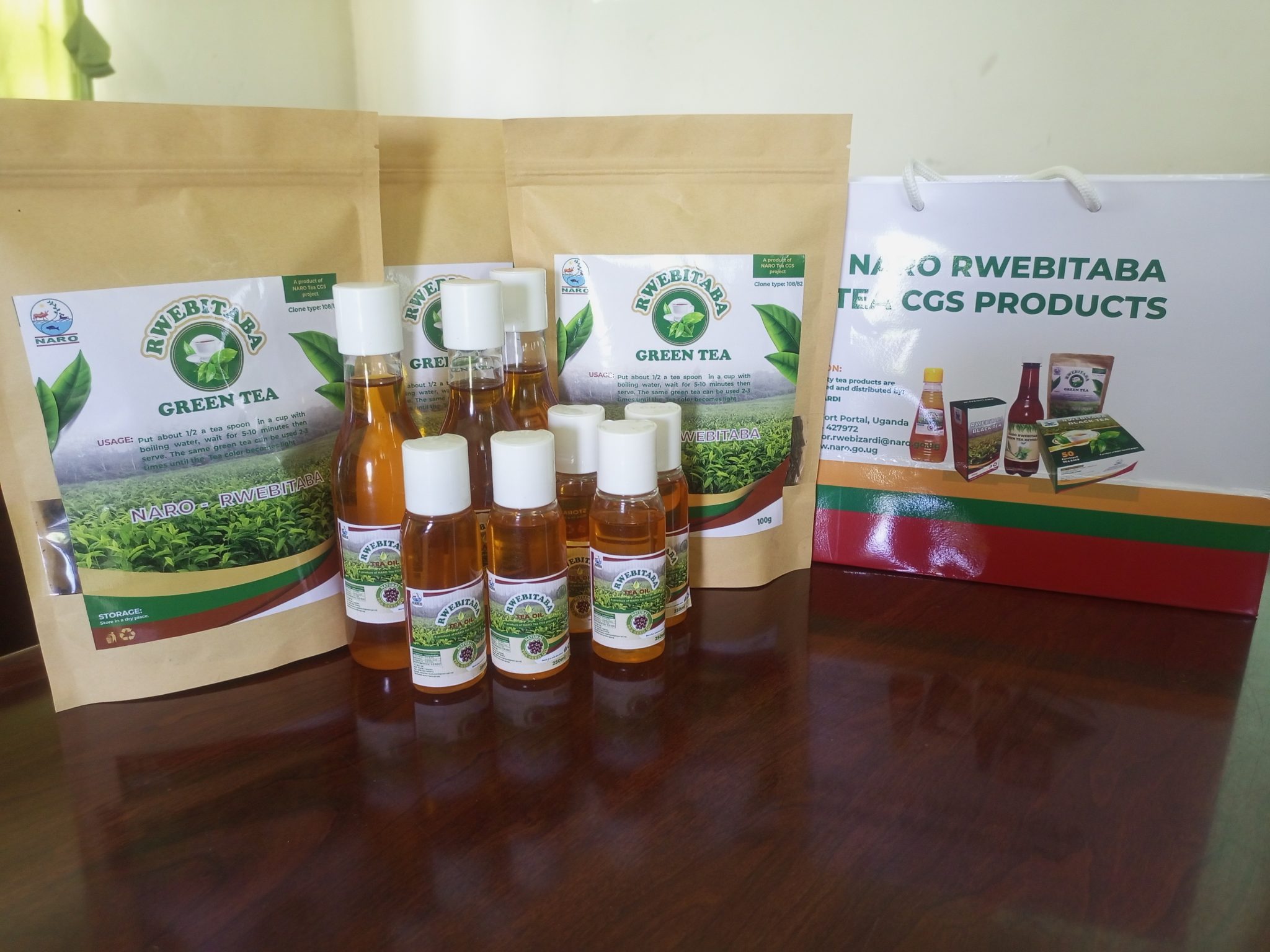
However, there’s hope for tea farming in Uganda, but that hope lies in thinking and working outside of the proverbial box. At the Rwebitaba Tea Research Center, a government- owned facility, we have developed the following product prototypes that tea farmers and others in the tea value chain might pick interest in.

Tea Lotion. This is a lotion like any other whose composition is 60% from tea leaves. These are combined with several other ingredients to make the product finer. It is still under evaluation to ascertain the quantities and ratios for commercial production of this product. The lotion will create new demand for the tea leaf whose prices fallen.
Green Tea. This is a healthy tea beverage which, for purposes of quality and has to be made from selected tea clones that are preferred for their slow fermentation. NARO has already come up with prototypes of both rolled green tea, crushed green tea and is evaluating these products for the requirements of their commercial production.
Tea soap. This product is also 60% green leaf and combined with a few other ingredients to fine-tune the product. Like the lotion, it is still under evaluation for requirements and ratios for commercial production.
Tea oil. This product is an extract from tea seeds. Farmers rarely notice that tea bushes have seeds. Indeed, these seeds can be harvested, dried and cold pressed to produce oil. This oil is good for use in both cosmetics and light cooking.
Purple Tea. This is a healthy tea beverage. NARO is yet to come up with a prototype of packaged purple tea which is currently fetching millions of dollars for farmers in Kericho, Kenya. However, purple tea is already under multiplication and production evaluation at Rwebitaba Tea Research Center. It is part of the prospective tea beverage products from East Africa’s oldest Tea Gene Bank at Rwebitaba TRC.
In addition, processors could also produce silver tea, flavored ready-to-drink tea beverages, oolong tea, orthodox teas, shampoos, creams, candies and pastries, tea-flavored sweets, Iced-tea products, and much more. These would diversify the offerings we get from tea, increase demand for green leaf and deepen local consumption all of which would raise the sources for income in the tea sector. This wide range of non-black tea products can be produced through small scale and cottage industries at a highly reduced low cost compared to black tea.
Such interventions with support from government and partners and the foundation of a yet-to-be enacted tea policy for Uganda will go a long way in solving the woes of the tea sector.